
The Joint Research Unit (UMR) 1059 “Health, Engineering, Biology, Saint-Étienne” (SAINBIOSE) is a collaboration between Jean Monnet University, the Saint-Étienne University Hospital, Inserm, Mines Saint-Étienne, and the French Blood Establishment. The acronym SAINBIOSE illustrates the commitment of researchers from various disciplines to collaborate in order to improve patient care. This multidisciplinary laboratory explores the interactions between human health, biomedical technologies, and engineering sciences.
Mission and Focus
SAINBIOSE aims to understand the biological and pathophysiological mechanisms of osteoarticular and vascular diseases. The objective is to develop innovative solutions for the diagnosis, treatment, and prevention of these pathologies, by integrating engineering and biological approaches.
SAINBIOSE’s strategy aligns with Inserm’s priority No. 1: “Strengthen interfaces in biomedical research between the fields of fundamental, translational, technological, and clinical research and consolidate the continuum towards economic and societal valorization.”
Research Areas
SAINBIOSE’s work is structured around two main axes:
- Biology of Osteoarticular Tissues (LBTO)
Research explores the mechanisms of bone loss in contexts of decreased mechanical stress, such as sedentary lifestyle, natural or accelerated aging. It also focuses on issues of bone repair and joint diseases, particularly those of inflammatory origin. - Vascular Dysfunction and Hemostasis (DVH)
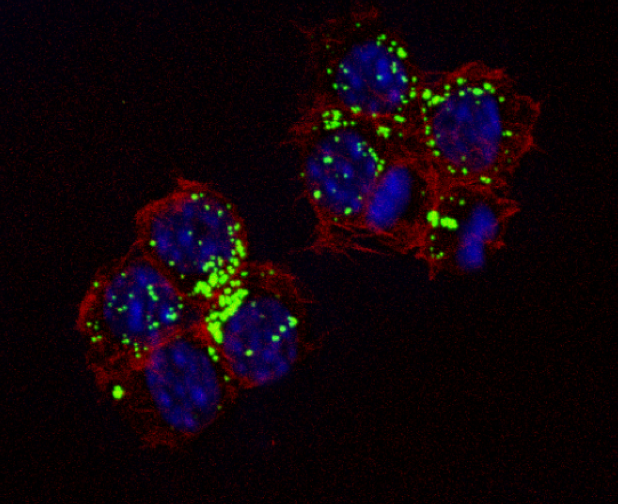
This area adopts a comprehensive approach by integrating the study of blood, vessel walls, blood-vessel interactions, as well as the biological activity of inhaled particles. Research focuses on mechanobiology in aortic aneurysms, the role of inflammation in coagulation processes, toxicology, and the development of physical or numerical models to deepen the understanding of these complex phenomena.
Presence at Mines Saint-Étienne
Within Mines Saint-Étienne, SAINBIOSE members are integrated into several departments.
- Biomechanics of Soft Tissues (STBio)
- Modeling and experimentation on soft biological tissues, applied to the cardiovascular and osteoarticular systems.
- Numerical simulation of endovascular surgeries.
- Study of the biomechanical action of medical textiles.
- Biomaterials Engineering (BioMat)
- Fabrication of biomaterials for bone applications.
- Development of bioinstructive materials for the understanding of biological mechanisms.
- Modeling of interactions between biomaterials and living tissues.
- Biological Activity of Inhaled Particles (BioPI)
- Study of the toxicity of nano and micrometric particles.
- Detection of particles in biological samples.
- Development of anatomical models for the study of aerosol deposits.
Strategic Projects and Partnerships
SAINBIOSE is involved in several large-scale collaborative projects.
- European Project MeDiTATe
- Development of medical digital twins based on cardiovascular imaging for the prevention and treatment of aneurysms.
- ANR ARTERYLASTIC
- Physio-mechanical study of a synthetic elastic protein as a molecular prosthesis to treat arteriopathies linked to defects in elastic fibers.
- Symphonies Project
- Improvement of medical compression for the management of lymphedema, in collaboration with industrial and academic partners.
Supervisory Institutions
- INSERM
- Université Jean Monnet
- Mines Saint-Étienne
Director of SAINBIOSE
SAINBIOSE, through its interdisciplinary approach and close collaborations with the industrial and academic sectors, contributes significantly to the advancement of knowledge and the development of innovative solutions in the field of health. Its involvement in strategic projects makes it a key player in supporting technological and medical transitions for human well-being.