
The Responsible Management and Innovation (MRI) department conducts applied research through various projects, contributing to the evolution of managerial and organizational practices. This section presents a selection of past projects, illustrating the department’s commitment to supporting businesses and regions towards more sustainable, innovative, and responsible models.
Duration: 12 months

Currently, the classical and dominant economic system is a so-called linear system. That is, it follows the chain: Extract – Transform – Distribute – Consume – Dispose. This linear system encourages overconsumption of upstream resources (especially the extraction and consumption of non-renewable resources) and waste, pollution, and waste at the end of the chain. It is notably at the root of a massive and exponential growth in waste, which is, ultimately, very little recycled internationally (e.g., plastic).
An alternative to this linear system is based on the circular economy. This economic model notably aims to:
- Regenerate ecosystems: the circular economy goes beyond recycling and reducing environmental impacts; it can help correct past mistakes.
- Eliminate waste and pollution: in a circular economy, waste is considered from the product design phase.
- Increase the lifespan of products and materials: moving from a notion of “consumer” to a notion of “users.”
Despite its multiple benefits, the transformation of our current economic system, our production and consumption patterns, raises several questions and challenges, particularly for developing countries.
For example, will the circular economy only benefit companies that can deploy energy efficiency and/or resource efficiency technologies? How can one contribute to the circular economy in a country where most products are imported? Is the circular economy truly an asset for developing countries? Do they have more to lose than to gain? Does the circular economy really have a chance to take hold against an economic model based on overconsumption and planned obsolescence? Is the status quo even possible?
In this context, the IFDD, through its partners: Mines Saint-Étienne; the Intersectoral Research and Study Center on the Circular Economy (CERIEC) of the École de technologie supérieure (ETS) of the Université du Québec; the Observatoire de la Francophonie économique (OFE) and the Réseau Normalisation et Francophonie (RNF) aims to produce a publication on “The challenges of the circular economy in the Francophone world.”
The project’s objective is to offer an analysis that allows for a better understanding of the challenges, opportunities, and risks of the circular economy for Francophone countries, particularly developing countries.

The Mines Saint-Étienne project team:
Michelle Mongo-Desage, Valérie Laforest, Audrey Tanguy and Hervé Vaillant
Sustainable Development Goals

The digital sector brings numerous innovations to organizations, many of which are currently implementing a digital transformation strategy. However, this transition must be articulated with the ecological transition necessary to sustainably reduce our carbon footprint. Digital sobriety aims to apply environmental sustainability criteria to the entire lifecycle of information and communication technology while encouraging the reduction of daily digital uses.
The SobrIT project studies how French SMEs and mid-caps adopt digital sobriety practices. To this end, two approaches will be mobilized. A quantitative study will statistically evaluate the current state of the phenomenon in organizations. A panel of 500 companies (all sectors combined) will allow for comparing the maturity levels of businesses. The analysis will also enable offering each participating company a diagnosis of its digital sobriety practices. A qualitative approach will then identify how digital sobriety practices are adopted by companies, and the role played by different stakeholders in this adoption, to better understand the process of practice adoption.
These results will lead to two developments transferable to companies:
- The diagnosis of Green IT practices to identify possible areas for improvement;
- A toolkit of best practices, illustrated by the real cases studied.
The project is funded by the Fondation du Crédit Agricole Loire Haute-Loire for a period of 18 months and a budget of €36,000. Digital League, a digital cluster, is a partner in the project.
Duration
18 months
Partners

Contacts
Julien De Benedittis, Sophie Peillon, Nadine Dubruc and Michelle Mongo-Desage
Sustainable Development Goal
Startups play a predominant role in the development of innovation. Their growth could contribute to economic, social, and environmental development, thus addressing a critical challenge at the national level. The growth of this type of company is contingent upon the development of their innovation. Adapting their strategy and business model through digital technology and digitalization undoubtedly represents a key success factor. The objective of this research project is
- to understand how startup business models evolve,
- the role of digitalization throughout their life cycles.
The project includes a qualitative study through a series of interviews conducted with start-ups and a quantitative survey to analyze the causal relationships highlighted by the qualitative study.
The results of this research can be used within the framework of support and assistance programmes for start-ups.
Dates
May 2021 – December 2021 (8 months)
Partners
The project team
- Amina Hamani, Postdoctoral Researcher
- Sophie Peillon, Senior Lecturer (HDR)
- Jean-Michel Degeorge, Senior Lecturer (HDR), Head of MRI Department
Restitution seminar for the project “Challenges of the digital transition for regional SMEs” on May 29, 2018, at Ateliers Weiss in St-Etienne
Sandrine Berger-Douce, Julien De Benedittis, Florent Breuil, Jean-Michel Degeorge, Thibaut Métailler, and François Jaujard (Henri Fayol Institute) organized a seminar for discussions on the digital transition for SMEs in the Loire region. A round table brought together Olivier Carré (Thuasne), Grégory Richa (Opéo Conseil), Claude Sabatin (BPI France), Nicolas Stori (Astrée Software), and Martine Séville (University Lyon 2).
This research project, funded by the Fondation pour l’innovation du Crédit Agricole Loire Haute-Loire, aims to identify the challenges of digital technology for regional SMEs and to propose pragmatic support consisting of a diagnosis and action plans. All innovative technologies, however brilliant, cannot be fully exploited if human barriers to their use persist. The goal here is to maximize the effectiveness of today’s and tomorrow’s technologies by supporting the transition at the level of the men and women in our companies.
The project stems from two observations:
- The digital transition is a profound transformation of work organization in companies (skills, leadership) and needs to be anticipated and supported
- The scarcity of studies on the digital transition in SMEs from a management perspective
This project supports innovation by assisting people. All innovative technologies, however brilliant, cannot be fully exploited if human barriers to their use persist.
The goal here is to maximize the effectiveness of today’s and tomorrow’s technologies by supporting the transition at the level of the men and women in our companies.
Project manager
Sandrine Berger-Douce, École des Mines de Saint-Étienne / Henri Fayol Institute
Other collaborators
Responsible Management and Innovation Department
Type
Industrial Chair
Description
Resilience and the fight against climate change are more than ever important global issues, particularly in Africa. In this context, international initiatives and commitments regarding funding are abundant. Today, on the African continent, the obstacle to energy transition is no longer the lack of political will from local, national, or international actors, nor the absence of adapted technologies (now more profitable than carbon-intensive technologies), nor even the investment offer. The major problem lies in the absence of bankable project proposals on the ground capable of meeting the expectations of potential investors, offering new markets for businesses.
This is precisely the core interest of the Sustainable Infrastructures and Territories Chair, initiated by MINES Saint-Étienne and the R20 Foundation, as it will enable, through training, capacity building, and access to knowledge, to support African project leaders in the structuring phase of their projects, by training and accompanying them with expert professionals, including those from EGIS / CDC with whom R20 has a partnership agreement, to achieve bankable projects.
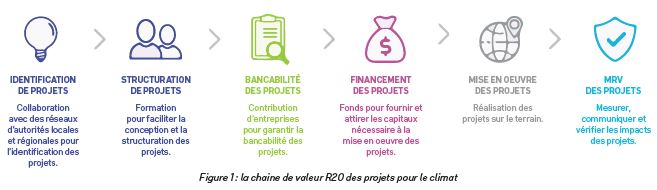
Within the R20 value chain of climate projects, the Sustainable Infrastructures and Territories Chair is part of the project structuring component.
Project manager
Michelle Mongo-Desage, Ecole des Mines de Saint-Étienne / Institut H. Fayol
Involved collaborators
Christian Brodhag, Bruno Léger, David Delafosse, Ecole des Mines de Saint-Étienne / Henri Fayol Institute
Other collaborators
Christophe Nuttall, Executive Director, R20 Foundation & David Albertani, Programme Director, R20 Foundation

Type
Armines Project (2017/2019)
Description
This involves conducting strategic diagnostics and supporting 10 structures in adopting a skills framework from the ARS (Regional Health Agency). This framework defines the support for people with disabilities or the elderly. These structures are medico-social organizations in the Rhône-Alpes region: CAMSP, CMPP, SESSAD, IME, ESAT, MAS, EPAH, SSIAD. This project is funded by the ARS and UNIFAF. Our main partner on this project is IRUP.
Project manager
N. Dubruc, Ecole des Mines de Saint-Étienne / Henri Fayol Institute
Involved collaborators
François Jaujard, Ecole des Mines de Saint-Étienne / Henri Fayol Institute
Type
Partnership Research (2017-2018)
Description
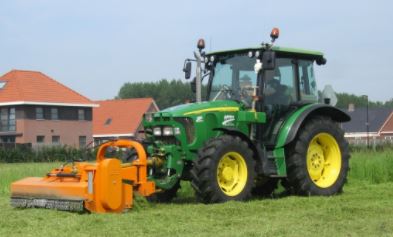
Intervention-research with an agricultural equipment manufacturer. This involves assisting the company in structuring and organizing its reflection on the content of the integrated product-service offering that could be developed and determining the necessary underlying skills. More specifically, the project consists of:
- Identifying and understanding the needs of different users
- Identifying and characterizing different opportunities for developing integrated product-service offerings relevant to the French and/or international market;
- Proposing one or more progressive scenario(s) for deploying integrated product-service offerings
Project manager
N. Dubruc, Ecole des Mines de Saint-Étienne / Henri Fayol Institute
Involved collaborators
S. Peillon, X. Boucher, Department of Environmental and Organizational Engineering, Ecole des Mines de Saint-Étienne / Henri Fayol Institute
Type
Partnership Research (2017-2018)
Description
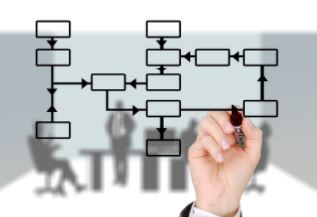
Intervention-research with a manufacturer of equipment primarily for the agri-food sector. The study consists of mapping the services offered by the company and assisting it in defining a service-oriented strategy. More specifically, the project focuses on the following two areas:
- Reflection on product-associated services, deepening and deploying the service strategy
- Evolution of the company’s culture and professions
Project manager
N. Dubruc, Ecole des Mines de Saint-Étienne / Henri Fayol Institute
Involved collaborators:
S. Peillon, X. Boucher, F. Jaujard, T. Métailler
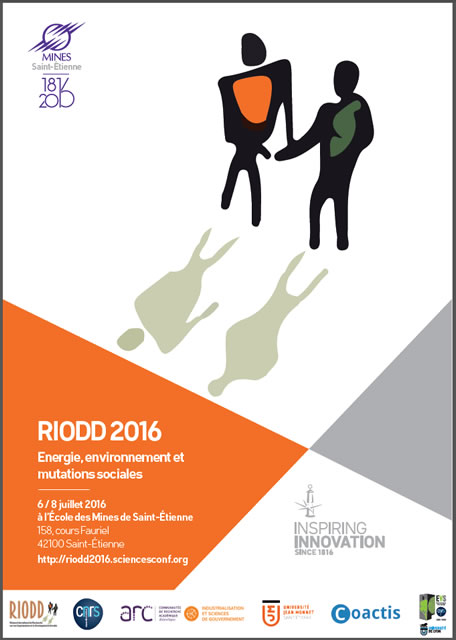
The organization of this 11th annual RIODD conference was led by the Henri Fayol Institute of the Ecole des Mines de St-Etienne. This multidisciplinary and internationally-oriented scientific event was part of the Bicentennial of the Ecole des Mines de St-Etienne in 2016.
In the tradition of Henri Fayol, one of the fathers of modern management and a former student of the School (1841-1925), the Henri Fayol Institute focuses on business performance through a broad systemic approach, aiming to design future organizations, within a perspective of social responsibility and sustainable development. It intends to propose global solutions, combining technical, economic, human, organizational, and social dimensions, to the dual challenge of ecological and digital transformations.
Project Manager:
Sandrine Berger-Douce, École des Mines de Saint-Étienne / Henri Fayol Institute
Other collaborators
RIODD
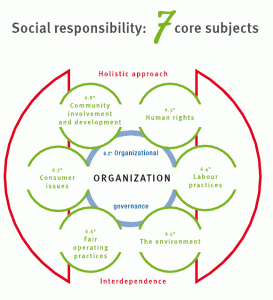
The department actively participated in initiatives for sustainable development and social responsibility with the work of AFNOR, which led to the SD 21000 text, as well as a significant contribution to ISO 26000.
Project manager
Christian Brodhag, Ecole des Mines de Saint-Étienne / Henri Fayol Institute /
Involved collaborators
Florent Breuil
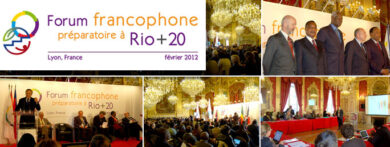
Francophone preparation for the Rio+20 world conference
It also participated in organizing the Francophone preparation for the Rio+20 world conference.
Type
ANR, 2012-2015.
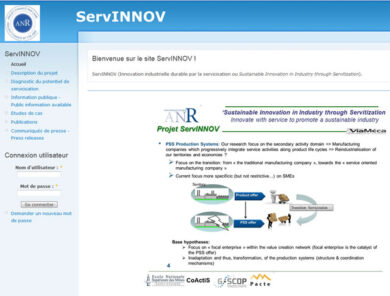
Description
To study one of the current transitions of industrial companies towards the integration of service activities. The objective is to provide a business diagnostic approach as well as scientific knowledge on servicization, the functional economy, and on models designed to manage this strategic and organizational transition of companies.
Project manager
Xavier Boucher, Ecole des Mines de Saint-Étienne / Henri Fayol Institute / Department of Environmental and Organizational Engineering
Involved collaborators
Nadine Dubruc, Sophie Peillon.
Other collaborators
CO-ACTIS Laboratory, UMR G-SCOP, UMR PACTE, MECALOIRE, ENVIE, SAVNetwork
Type
Interdisciplinary Research Programme on City and Environment (PIRVE – CNRS), 2011-2013.
Description
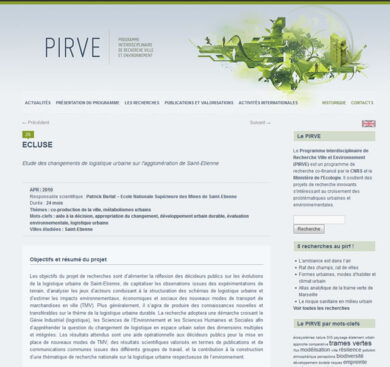
The objectives of the research project are to inform public decision-makers’ reflections on the evolution of urban logistics in Saint-Étienne, to capitalize on observations from field experiments, to analyze the interplay of actors leading to the structuring of urban logistics schemes, and to estimate the environmental, economic, and social impacts of new modes of urban freight transport (TMV).
Project manager
Patrick Burlat, Ecole des Mines de Saint-Étienne / Henri Fayol Institute / Department of Environmental and Organizational Engineering
Involved collaborator
Nadine Dubruc.
Other collaborators
City of Saint-Étienne, Saint-Étienne Metropole, Epures, ESC Saint-Étienne, EIGSI (La Rochelle engineering school)
Type
Armines/OSEO Agreement, 2011-2012.
Description
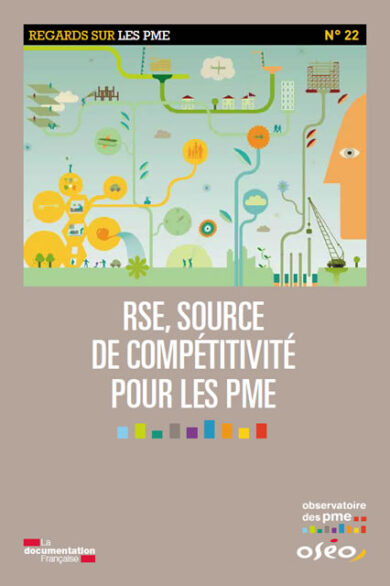
Exploratory study and creation of monographs of exemplary companies in terms of social responsibility. Writing of a book in the “Regards sur les PME” collection.
Project manager
Christian Brodhag, Ecole des Mines de Saint-Étienne / Henri Fayol Institute /
Involved collaborators
Sandrine Berger-Douce, Florent Breuil, Nadine Dubruc, Sophie Peillon, François Jaujard.
Other collaborators
OSEO
Type
UVED, 2012-2013.
Description
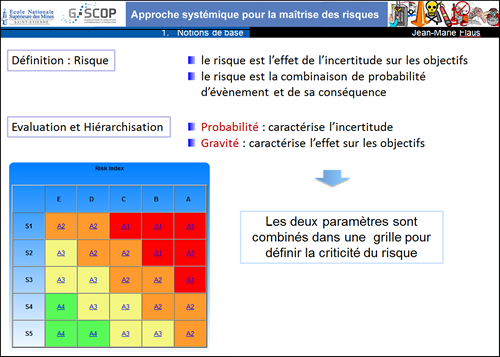
The ASAR project, funded by UVED, aims to develop an open-source educational resource in the form of a case study, allowing students to practice risk analysis methods. The objective is to design and provide an educational tool for learning XRISK modeling.
Project manager
Alicja Tardy, Ecole des Mines de Saint-Étienne / Henri Fayol Institute / Department of Environmental and Organizational Engineering
Involved collaborator
Florent Breuil
Other collaborators
LINPG – G-SCOP
Type
Ministry MEDATT, 2011-2012.
Description
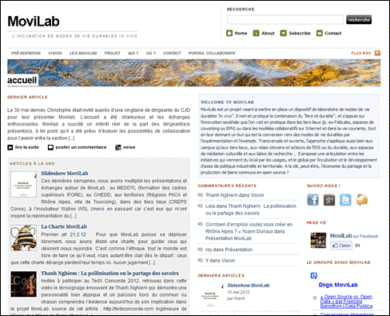
A large-scale conversion to sustainable lifestyles is finally within our reach thanks to the conjunction of several underlying trends:
-revolution of our lifestyles by the Web and the suddenness of induced transformations, dissemination of models based on functionality and access to service,
-rise of collaborative consumption and grassroots innovations, proliferation of alternative systems rooted in proximity, surge of creative classes and professional amateurs, all against a backdrop of crisis and widespread “fed up” with the excesses of the dominant system.
Project manager
Skema Business School, ENSMSE, Fondaterra
Involved collaborators
Nadine Dubruc, Sophie Peillon, François Jaujard
Other collaborators
Computer Science and Intelligent Systems Department, La Rotonde, SKEMA
Type
Francophonie.
Description
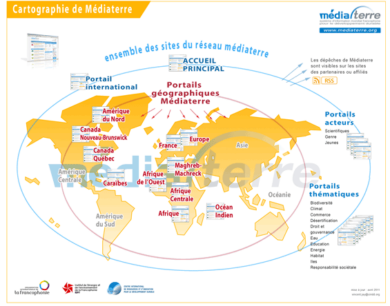
Médiaterre is today the leading Francophone information network on sustainable development. Its objective is to facilitate the dissemination of international news on sustainable development in French.
Project manager
International Center for Resources and Innovation for Sustainable Development.
Involved collaborators
Florent Breuil, Christian Brodhag
Other collaborators
About thirty Francophone public or private organizations, academic or civil society.