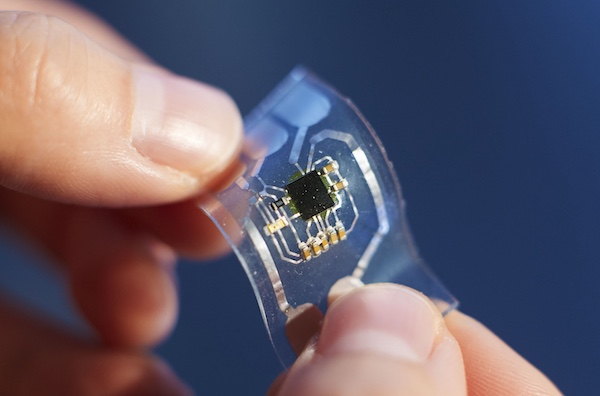
The Flexible Electronics Department (FEL) at Mines Saint-Étienne specializes in research and development of autonomous, ultra-thin, flexible, and conformable electronic devices. By combining expertise in nanomaterials, heterogeneous integration, and energy management, the department contributes to innovation in various fields such as the Internet of Things (IoT), micro-batteries, and smart sensors.
Head
Pr Marc Ramuz
Email: ramuz@mines-stetienne.fr
Areas of Expertise
Core Competencies
The department stands out for its expertise in developing electronic devices on non-conventional substrates, including flexible and stretchable materials.
- Materials Science:
Mastery of nanomaterials for the development of ultra-thin, autonomous, and conformable electronic devices. - Electrical Engineering:
Design and optimization of complex electronic components specifically adapted for flexible platforms. - Printing Technologies:
Advanced use of techniques such as inkjet printing and selective sintering technologies (microwave, IR, photonic) to fabricate next-generation electronic devices. - Mechanical Characterization:
Evaluation of the physicochemical and mechanical properties of devices to ensure long-term performance and durability.
Through this multidisciplinary approach, FEL plays a leading role in the advancement of flexible, high-performance electronic systems.
Fields of activity
The department actively contributes to a wide range of emerging fields by developing innovative flexible electronic systems tailored to real-world applications:
- Smart Interfaces (Human-Machine Interaction):
Development of interactive surfaces and flexible touch sensors to enhance user experience. - Internet of Things (IoT):
Design of flexible sensors and actuators embedded in connected objects for applications in various sectors. - Micro-Batteries:
Creation of miniaturized, flexible power sources to energize portable and wearable electronic devices. - Smart Sensors:
Development of flexible sensors for detection and monitoring in diverse environments. - Biorobotics and Biomimetics:
Integration of flexible electronic components into bio-inspired robotic systems. - Printing Technologies:
Implementation of advanced printing processes for manufacturing electronic devices on flexible substrates.
These areas reflect FEL’s mission to push the boundaries of electronics by combining functional performance, material adaptability, and technological integration.
Research Areas
The research activities of the Flexible Electronics Department (FEL) are structured around the following key themes:
- Development of Flexible and Stretchable Electronic Devices:
Designing components capable of adapting to various shapes while maintaining high performance and reliability. - Energy Management:
Optimizing power consumption and integrating energy harvesting solutions to support the autonomy of flexible devices. - Heterogeneous Integration:
Assembling diverse technologies and materials on flexible substrates to develop multifunctional systems. - Optimization of Physicochemical and Mechanical Properties:
Conducting in-depth studies of materials and fabrication processes to enhance the durability and reliability of devices. - Modeling and Testing Procedures:
Developing predictive models and testing protocols to ensure consistent performance under diverse operational conditions.
These focus areas support FEL’s mission to innovate in the field of flexible, intelligent, and sustainable electronics.
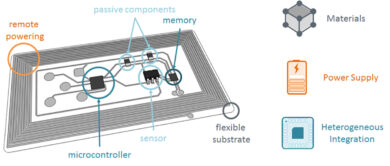
Figure: Autonomous flexible smart sensors
Contact and Practical Information
- Head
Prof. Marc Ramuz - Email
ramuz@mines-stetienne.fr
- Address
École des mines de Saint-Étienne
Centre of Microelectronics in Provence
880, route de Mimet
13541 Gardanne, France
- Transport
Bus: Line 183, stop « Centre Charpak »
Train: Regular shuttles on Line 3 from Gardanne train station
Airport: Connections from Marseille Provence Airport