
The Department of Bioelectronics (BEL) at Mines Saint-Étienne specializes in interfacing microelectronics with biology to develop innovative bioelectronic technologies. Our goal is to create cutting-edge solutions that bridge the gap between biological systems and electronic devices for applications in healthcare, neurosciences, and medical diagnostics.
Head of Department
David Moreau
Mail: david.moreau@mines-stetienne.fr
Bioelectronics: A Fusion of Biology and Electronics
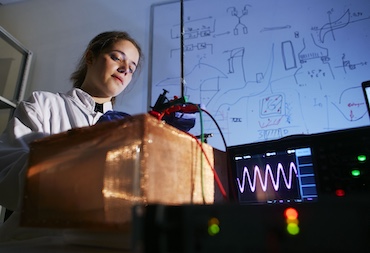
Bioelectronics is an interdisciplinary field that merges biological systems with electronic technology, enabling innovative solutions in healthcare, neuroscience, and diagnostics. This field harnesses the natural properties of biological molecules—such as their ability to recognize and respond to specific signals—and integrates them with advanced microelectronics to develop powerful biosensors, neural interfaces, and medical implants. The bidirectional interaction between electronics and biology allows for real-time monitoring of physiological processes and the active modulation of biological functions, paving the way for next-generation medical treatments and diagnostic tools.
Areas of Expertise
The Department of Bioelectronics (BEL) specializes in the design and development of bioelectronic systems, combining electronics, microfabrication, and biology to create innovative medical technologies.
Skills
Microelectronics and Organic Electronics for Biointerfaces
- Design and fabrication of flexible, biocompatible, and miniaturized bioelectronic devices.
- Development of organic and hybrid semiconductor materials for enhanced biological interactions.
Biosensor Development and Biomedical Signal Processing
- Creation of high-sensitivity biosensors for real-time health monitoring.
- Implementation of AI-driven signal analysis for medical diagnostics.
Neural Engineering and Brain-Machine Interfaces
- Advanced microelectrode array design for high-resolution neural recording and stimulation.
- Development of closed-loop neuromodulation systems for cognitive and motor rehabilitation.
Microfluidics and Lab-on-Chip Technologies
- Integration of microfluidic platforms with bioelectronics for point-of-care diagnostics.
- Engineering organ-on-chip models for biomedical research.
Bioelectronic Medicine and Electrostimulation Therapies
- Development of implantable neurostimulation devices for therapeutic applications.
- Exploration of electrostimulation techniques for treating neurological disorders.
Areas of intervention
Medical and Healthcare Applications
- Implantable bioelectronic devices for real-time health monitoring.
- Wearable biosensors for non-invasive patient tracking.
Neuroscience and Neurotechnology
- Brain-computer interfaces (BCI) for assistive and therapeutic applications.
- Neurostimulation technologies for treating neurological conditions.
Biomedical Diagnostics and Personalized Medicine
- Portable biosensing platforms for early disease detection.
- Lab-on-chip devices for rapid and cost-effective diagnostics.
Tissue Engineering and Regenerative Medicine
- Bioelectronic scaffolds for guided tissue regeneration.
- Electrically-stimulated cell growth technologies.
Environmental and Agricultural Bioelectronics
- Bioelectronic solutions for smart agriculture and food safety.
- Biosensors for environmental monitoring (water quality, pollutant detection).
Research Axes
Our research focuses on pushing the boundaries of bioelectronics by developing new materials, interfaces, and devices that enhance human-machine interactions. The main research axes include:
- Neural Interfaces & Brain-Machine Communication
Development of high-density neural electrode arrays and adaptive stimulation protocols to enhance brain-computer interfaces (BCI). - Bioelectronic Medicine & Therapeutic Stimulation
Design of innovative electroceutical therapies for treating neurological and psychiatric disorders through targeted neurostimulation. - Biosensing & Bioanalytical Technologies
Creation of ultrasensitive biosensors and portable diagnostic tools for real-time health monitoring. - Materials & Device Engineering for Bioelectronics
Development of organic and hybrid electronic materials to optimize the interaction between biological tissues and electronic devices.
Our history
The Department of Bioelectronics (BEL) is located on the campus Aix-Marseille-Provence campus of the École des Mines de Saint-Étienne, in the outskirts of Marseille. The founding vision of BEL was to create “an internationally renowned Department in which bioelectronic technologies are generated through better understanding and control of the electronics/tissue interface, and which provides outstanding education opportunities in this rapidly evolving field”. The approach that was chosen was to build a mixed team of faculty with backgrounds in physical sciences/engineering and in life sciences within the same department, in order to foster the intimate integration of these two disciplines.
BEL was created in 2009 with significant financial support from local authorities (Regional Council PACA and Conseil Général des Bouches du Rhône) and from Europe (European Regional Development Fund). It currently has four permanent people (three faculty and one research engineer) and about 15 non-permanent researchers (postdocs, graduate students, engineers, visitors). Non-permanent personnel, as well as operating expenses are financed by grants from various international organizations, the European Union, French agencies and foundations, the region, and industry.
BEL benefits from strong ties with:
- the Institut de Neurosciences de la Timone a mixed team between the Aix-Marseille University and the CNRS with shared interests in Neurotechnology.
- the Institute of Neuroscience of Systems, a mixed team between the Aix-Marseille University and the INSERM with shared interest in Neuroengineering.
Our philosophy
Consistent with our founding vision outlined above, we welcome collaborations with like-minded academic and industrial teams. Working with industry, in particular, is an important part of our mission. Since our school belongs to the Ministry of Industry, such collaborations are relatively straightforward to setup and can be mutually beneficial. We operate based on an “open source” model, where our core technologies and know-how are disseminated to the scientific community via publications, conference presentations etc. Industrial partners can benefit from working with us by (1) learning about organic bioelectronics from one of the leading groups in the field, and (2) getting visibility through joint publications, presentations etc. On the other hand, knowledge developed in our Department is disseminated openly, hence does not “belong” to any particular industrial partner. Otherwise said, we gladly offer our extensive knowledge to industry, but with the understanding that we maintain our freedom to disseminate and to engage in research with multiple partners.
Contact and Practical Information
- Head of Department
David Moreau - Email
david.moreau@mines-stetienne.fr
- Address
École des mines de Saint-Étienne
Centre Microélectronique de Provence
880, route de Mimet
13541 Gardanne, France
- Transport
Bus: Line 183, stop « Centre Charpak »
Train: Regular shuttles on Line 3 from Gardanne train station
Airport: Connections from Marseille Provence Airport