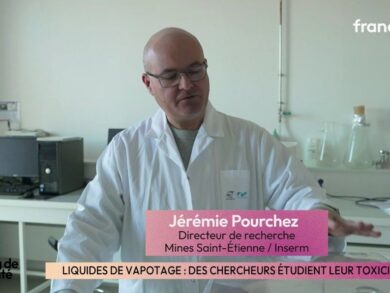
The Biological Activity of Inhaled Particles (BioPI) department develops integrated and translational research dedicated to understanding the interactions between inhaled particles and biological systems.
Its expertise is based on a unique interdisciplinary approach combining: physical chemistry of divided solids, metrology and respiratory deposition of aerosols, cellular and molecular biology, pharmacology of inhaled therapy, and translational clinical research.
Within Inserm Unit U1059 SAINBIOSE, the department’s work covers a continuum ranging from the physicochemical characterization of aerosolized particles to the evaluation of their biological effects, up to their transfer to clinical and industrial applications.
The research focuses on both:
- environmental and occupational exposures (inhalation toxicology),
- medical devices and aerosol therapy administration technologies,
- emerging public health issues (vaping, microplastics, tire wear particles, complex pollution).
Head
Valérie Forest
Email: vforest@mines-stetienne.fr
Areas of Expertise
Core Competencies
- Physicochemical characterization of particles
Analysis of the physicochemical descriptors of inhaled particles to understand their biological fate, their interactions with biological systems, and their potential toxicity. - Cellular and molecular toxicology
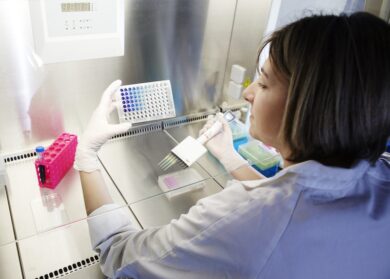
Evaluation of the effects of nanoparticles and fine particles on respiratory cells and tissues: oxidative stress, inflammation, cytotoxicity, vascular and hemostatic alterations. - Cellular pharmacology
Pharmacokinetic evaluation of inhaled therapies on in vitro models and perfused and ventilated ex vivo lung models. - Metrology and respiratory deposition of aerosols
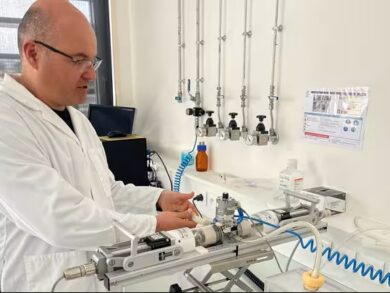
Aerosol generation (liquids, solids, biological), aerodynamic and granulometric characterization, study of aerosol deposition on anatomical models of the upper airways and ventilated ex vivo lung models. - Evaluation of medical device performance
Characterization (granulometry and emitted dose) and optimization of inhalation administration technologies (nebulizers, inhalers, sprays, electronic cigarettes), as well as personal protective equipment, such as masks.
Fields of activity
- Aerosol therapy
Studies on the efficacy of treatments administered by inhalation, including technological development of devices and regional mapping of respiratory tract deposition. - Risk prevention and occupational health
Characterization of exposure to fine and ultrafine particles in industrial and natural environments; evaluation of associated biological impacts. - Filtration device efficacy
Experimental validation of the performance of masks and filters against particles, bacteria, and viruses (including SARS-CoV-2). - Public health and environment
Studies on the impacts of inhaled particles on human health and ecosystems, with an emphasis on prevention and risk reduction.
Research Areas
- Particle toxicity
Fundamental and applied studies on the interactions of nanoparticles and micrometric particles with human cells, to evaluate their biocompatibility and toxic effects. - Detection and analysis of particles in biological samples
Observational studies to establish links between the presence of particles in patients’ tissues or biological fluids and their pathologies. - Aerosol metrology and occupational exposure
Characterization of aerosols and study of exposure conditions in professional environments. - Aerosol therapy
Development and evaluation of administration devices, characterization of vapor emissions, toxicology of inhaled products, and studies on the gateway effect of electronic cigarettes. - Mask filtration efficacy
Validation of the performance of medical masks against particles and infectious agents, with specific applications such as the fight against Covid-19.
By covering these application areas, BioPI contributes to understanding the interactions between inhaled particles and biological systems, and to developing innovative solutions to improve health and the environment.
Research unit
The BioPI department is integrated into the SAINBIOSE research unit, where it deepens the understanding of the effects of inhaled particles on human health. This dynamic, driven by the Vascular and Hemostasis Dysfunctions (DVH) team of SAINBIOSE, relies on complementary expertise to explore the interactions between particles and biological systems. This research contributes to the design of innovative solutions for public health and the fight against risks related to inhaled particles.
Main areas of collaboration
- Translational research to address public health challenges related to respiratory, cardiovascular, and environmental pathologies.
- Study of the biological effects of inhaled particles through cellular and molecular models.
- Development of medical devices and personal protective equipment.
- Interdisciplinary health-environment-industry projects.
Contact and Practical Information
- Head
Valérie Forest - Email
vforest@mines-stetienne.fr
- Address
École des Mines de Saint-Étienne
Centre for Biomedical and Healthcare Engineering
10, rue de la Marandière,
42270 Saint-Priest-en-Jarez, France - Transport
Tram T1 or T3, “Hôpital Nord” stop (terminus)
Related Articles