
Sustainable development is a central pillar of Mines Saint-Étienne’s strategy, integrating environmental, social and economic dimensions into its education, research, innovation and knowledge transfer activities for society.
This strategy addresses the challenges of the ecological transition, enabling the school to train high-level professionals ready to tackle the challenges of the digital and industrial transitions in an international environment. Mines Saint-Étienne also develops research excellence to provide comprehensive support for the major transformations of the 21st century.
Here is an overview of the initiatives and commitments that illustrate this approach.
Our Strategic Vision
The strategy of Mines Saint-Étienne is built on one key driver and two major thematic areas: ecological transition, which serves as a catalyst for our transformations, and industry of the future and healthcare engineering, which define our areas of innovation and teaching.
Today’s global challenges require a fundamental rethinking of how we prepare tomorrow’s engineers. For these future high-level professionals, it is essential to understand the “Earth system” in all its complexity, integrating the concepts of planetary boundaries, sustainability, efficiency, and the environmental impact of our actions.
This vision demands a critical review of our methods, both in knowledge transmission and in teaching new technologies. Expectations are clear: students, businesses, and society expect engineers to deliver solutions that are both ethical and innovative.
This is why our School, and more broadly the IMT, is fully committed to being a leading player in this approach, particularly at the heart of these two key sectors of the 21st century: industry and healthcare.
Sustainable Development Goals (SDGs)
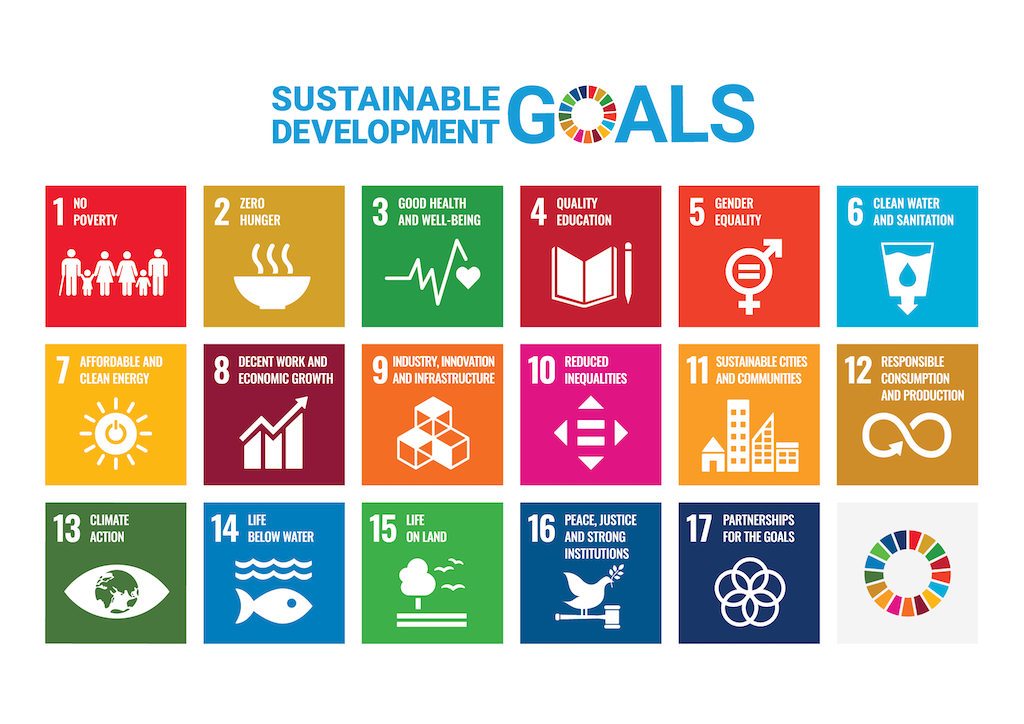
The school draws on the Sustainable Development Goals (SDGs) defined by the United Nations, particularly those related to climate action (SDG 13), decent work and economic growth (SDG 8), responsible consumption and production (SDG 12), and health and well-being (SDG 3). A significant portion of the institution’s research work and educational initiatives is designed to contribute to these global objectives, ensuring that their efforts have a tangible impact.
Committed educational programs
Addressing sustainable development challenges requires both the creation of new sustainable and efficient technologies and the training of leaders capable of driving these transitions. This applies to both initial education and lifelong learning, making the Sustainable Development Goals (SDGs) central to our educational ecosystem.
Our education programmes are designed to provide a broad knowledge base, in
line with the recommendations of the Jouzel report (2020). This translates into:
- A compulsory common module, aimed in particular at mastering the scientific foundations of climate and environmental variability, and how they apply at different scales.
- Specific modules dedicated to key themes such as sustainability, the energy transition, the circular economy and environmental assessment, directly integrated into engineering curricula.
- An interdisciplinary approach, enabling students to combine technical, economic and environmental skills in order to design sustainable solutions.
- The development of reflective skills, encouraging future engineers to take a critical look at the ecological and social impacts of their projects and decisions.
- The creation of specific degrees focused on environmental challenges, such as the specialised engineering programme TECTO (Ecological and climate transition for territories and organisations) or the Advance Master Manager of Polluted Sites and Soils Projects.
Research and Innovation for a Sustainable Future
Research projects conducted at Mines Saint-Étienne are strongly focused on developing sustainable technologies and innovative solutions to address today’s environmental challenges: eco-friendly and sustainable materials, renewable energy, resilient and decarbonised industry, innovation and the circular economy, corporate social responsibility…
A Sustainable Innovation Ecosystem
Mines Saint-Étienne is part of a dynamic innovation ecosystem that fosters the development of startups and innovative projects focused on sustainability.
- Incubators and Accelerators
The school supports startups developing green technologies, providing a collaborative space where students, researchers, and entrepreneurs can share ideas and innovate together. - Workshops and Seminars on Sustainability
The school regularly organises events to raise awareness and educate on sustainable development challenges, promote knowledge sharing, and foster collaborative innovation.
DD&RS Label and International Recognition
Mines Saint-Étienne holds the DD&RS label (Sustainable Development & Social Responsibility), which certifies the school’s commitment since 2016. Awarded again in 2021 and then in 2025, this label makes Mines Saint-Étienne one of the first French schools to be triple-certified for 4 years, validating the integration of sustainability into its teaching, governance and partnerships.
In addition, since 2023 the institution has held the Responsible Digital Label (Level 1), also renewed in 2025. Based on the framework of the Institut du Numérique Responsable (INR), it recognises the joint actions of the Information Systems Department (DSI) and the Ecological Transition working group to promote a more inclusive, ethical and eco-responsible digital approach.
This is complemented by regular international recognition in the Times Higher Education (THE Impact) ranking, where the school stands out among the world’s top institutions for its action on climate change.
Industry Partnerships
Mines Saint-Étienne collaborates closely with companies, local authorities, and organisations to develop sustainable solutions that address current industrial and societal challenges. This includes:
- Joint projects with companies to integrate cleaner technologies into production chains.
- Local initiatives to enhance environmental resilience in communities, particularly in resource and waste management.
Student Engagement
The school actively encourages student engagement through various initiatives, notably via a dedicated Teaching Unit that recognises this commitment by awarding ECTS credits. Students are thus encouraged to design and lead concrete actions: awareness campaigns, eco-project competitions, or initiatives aimed at reducing the campus carbon footprint.
Sustainable Infrastructure
Mines Saint-Étienne’s commitment is also reflected in the eco-responsible management of its infrastructure and campuses.
- Eco-friendly buildings
Since 2022, Mines Saint-Étienne has made a Sobriety Plan permanent, which has drastically reduced its energy consumption through the implementation of actions co-designed with all stakeholders. - Sustainable mobility
The school has rolled out an Employer Mobility Plan to encourage active and low-carbon mobility among both staff and students. - Biodiversity management
Since 2020, the Cours Fauriel (Saint-Étienne) and Aix-Marseille-Provence (Gardanne) campuses have been engaged in the Refuge LPO® initiative. In partnership with local LPO branches (42 and 13), the school is implementing a concrete action plan to preserve local biodiversity: differentiated mowing management, respecting nesting periods when maintaining hedges, and installing shelters and nesting boxes.
Ecological Transition Working Group
As early as 2005, Mines Saint-Étienne set up a delegation dedicated to sustainable development and social responsibility, directly attached to the school’s director. Now called GT Transition Écologique, this body is made up of:
- 2 strategic project managers for “ecological transition” appointed by the director (one teacher-researcher and the Quality, Safety, Security and Environment Engineer);
- a sustainable development officer;
- one or more members from each research centre and service of the school;
- student representatives (presidents of student associations engaged in sustainable development);
- two members of the Alumni network.
The GT Transition Écologique plans sustainable development actions and leads the Social and Environmental Responsibility Committee (CoRSE), which presents and steers strategic initiatives in the Executive Committee (ComDir) twice a year.
Mines Saint-Étienne has chosen to voluntarily develop its Sustainable Development, Social & Environmental Responsibility Master Plan (SD-DDRSE), structured around the DD&RS Label framework. More than a simple roadmap, this document represents a strong and determined commitment to a more sustainable and fairer future.
Note: As a public institution under the supervision of the Ministry of the Economy, Finance and Industrial and Digital Sovereignty, Mines Saint-Étienne is not subject to the legal obligation to publish an SD-DDRSE, unlike institutions under the Ministry of Higher Education and Research.