
The objectives set by the department aim to develop technological building blocks suitable for the design of electronic components that are complex, flexible, and stretchable. In particular, the optimization of the physicochemical and mechanical parameters governing their implementation, as well as the creation of models and testing procedures to guarantee their operation and lifespan, constitute the department’s main development areas.
To prepare for the electronics of the future, our activities are structured around three major areas of fundamental research, combined for various applications.
Let’s start with the applications
We develop processes and expertise to manufacture electronic objects on flexible and stretchable substrates, while maintaining a high level of performance, integration, functionality, and reliability. Here are some examples of devices and applications.
Flexible and stretchable micro-batteries
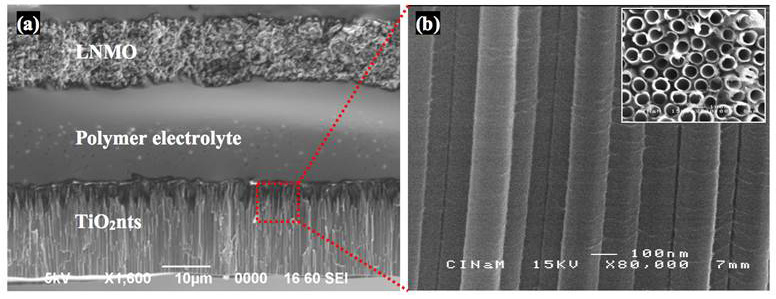
SEM images of the cross-section of the all-solid-state battery composed of TiO₂ nanotubes / polymer electrolyte / LNMO.
(a) Enlarged view of self-organized TiO₂ nanotubes.
(b) The inset shows the top view of the nanotubes.
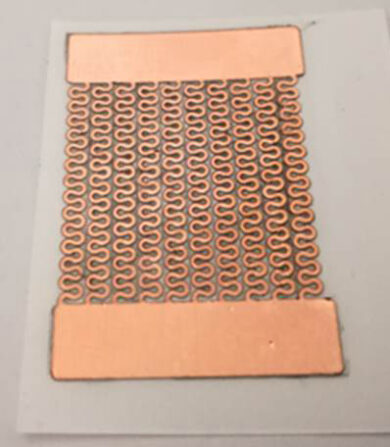
Stretchable electrode for Li-ion micro-batteries
Smart interfaces (Smart Tags, RF Touchpads, etc.)

RFID tag on paper
Bio-robotics (electronic skin) and smart textiles based on stretchable electronics
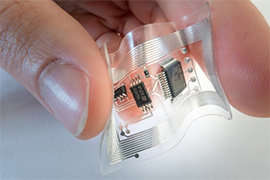
Stretchable sensor
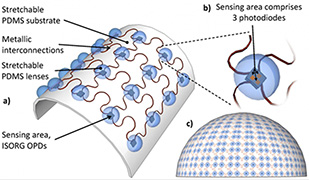
Stretchable artificial retina
Organic printed electronics
Wearable electronics / Organic bioelectronics
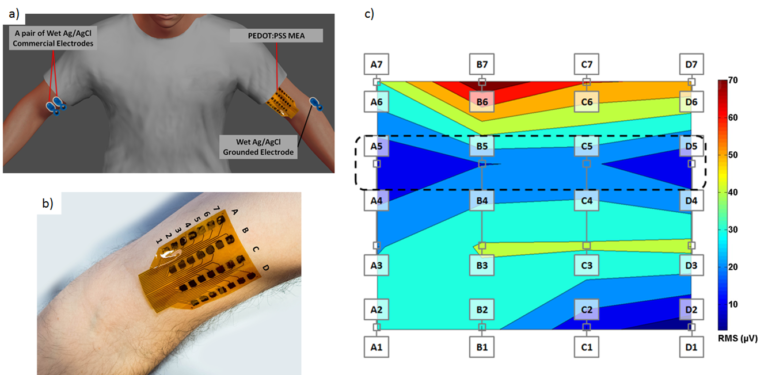
a) EMG setup, b) Cutaneous EMGs (all IJP), c) Neuromuscular mapping (EMG signals)
CMOS circuits and ultra-flexible organic transistors

Ultra-flexible OTFTs & inkjet-printed OTFTs

Patterning of PEDOT:PSS by soft lithography
Fundamental research for flexible and stretchable demonstrators
Creating these demonstrators requires fundamental research activities from the earliest stages of development. We focus on three major technological building blocks.
1. Nanomaterials
- Ink manufacturing
- Deposition and patterning
- Characterization

SEM image of the synthesized conductive ink
2. Stretchable and conformable electronics
- Various substrates
- Electronic printing
- Integrated circuit packaging
- Hybrid electronics

Organic photodiode on a stretchable substrate
3. Micro-batteries
- Solid-state batteries
- Flexible micro-batteries
- Energy harvesting (thermoelectricity and triboelectricity)
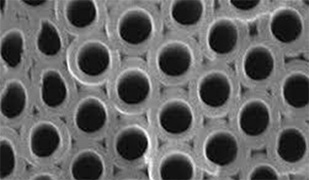
Model electrode for batteries

This research allows us to push the boundaries of flexible and stretchable electronics for innovative applications tailored to the technological needs of tomorrow.