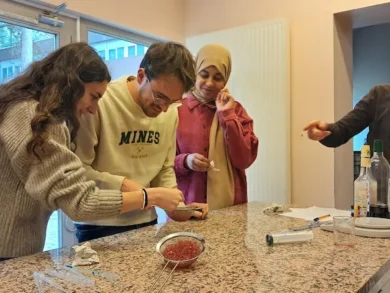
The Process for Environment and Geo-Ressources (PEG) department, part of the Centre for Chemical Engineering (SPIN) at Mines Saint-Étienne, focuses its activities on understanding processes and optimizing technologies related to the sustainable management of natural resources (water, soil) and raw materials. It draws on interdisciplinary expertise to address environmental, industrial, and energy challenges.
Head
Baptiste Bouillot
Email: bouillot@mines-stetienne.fr
Areas of Expertise
Core Competencies
- Crystallization
- Hydrology
- Environmental geochemistry
- Hydrometallurgy and mineral resource recovery
- Phytotechnologies and bioindication
- Geomatics
- Fluid mechanics
- Transport phenomena
Fields of activity
- Polluted sites and soils
Management (rehabilitation) of brownfields and contaminated industrial sites (diagnosis, strategy, stabilization and contaminant transfers) - Water treatment
Innovative solutions for depollution and sustainable management. - CO₂ capture
Development of carbon sequestration processes. - Management of natural resources and raw materials
Hydrological monitoring, solid waste recovery, urban mining. - Energy
Storage, heat exchangers.
Research Areas
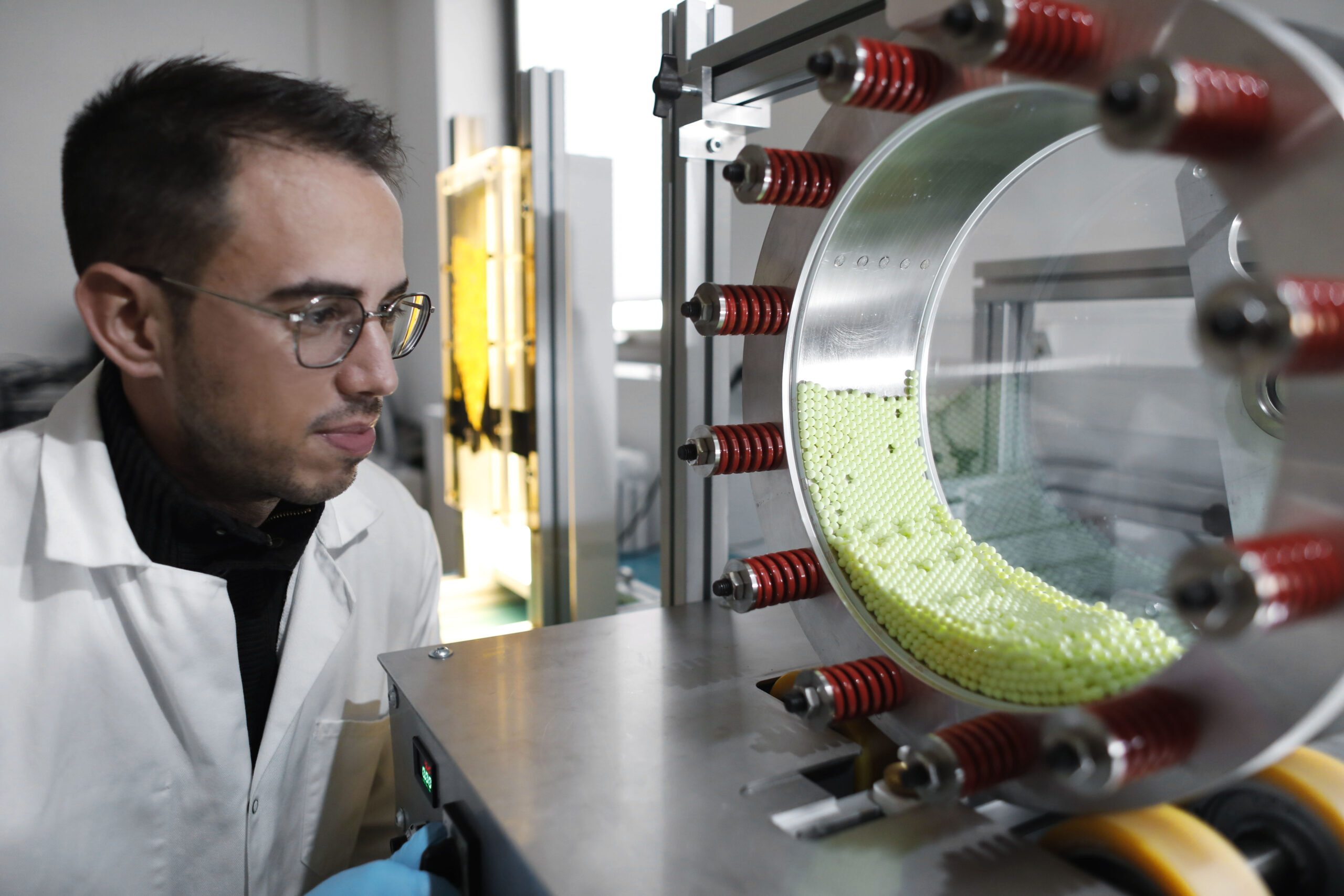
- Crystallization and dissolution processes
Study of solid/liquid interactions to optimize industrial processes, thermodynamics of equilibria with a solid phase, CFD/population balance coupling, gas hydrates. - Transfers in natural and human-impacted environments
Understanding and modeling transport phenomena (water, organic and metallic contaminants) and reactive transfers in soils, aquifers and industrial systems. - Phytoremediation and polluted soils
Development of biological solutions and indicators to rehabilitate contaminated soils. - Transfers at the gas–liquid–solid interface
Understanding and modeling heat and mass transfer at the gas–liquid–solid interface to optimize CO2 sequestration technologies. - Reactive and multiphase flows
Study and modeling of gas–liquid interactions and interfacial transfers. - Mineral materials recovery
Recovery of value-added mineral materials (WEEE, phosphogypsum…)
Research unit
The UMR CNRS 5600 – Environment City Society research unit is an interdisciplinary laboratory that explores the interactions between human activities, territories, and natural resources. It mobilizes expertise in geography, urban planning, sociology, and geosciences to analyze territorial dynamics, environmental impacts, and sustainable development solutions. Within the PEG department, this unit plays an essential role in polluted soil management, urban regeneration, and the development of integrated strategies for sustainable resource exploitation. Collaborations focus on material flow modeling, brownfield remediation, and supporting public policies in the ecological transition of territories.
The Georges Friedel Laboratory (UMR CNRS 5307) is a research center specializing in the study of materials and processes, in connection with industrial and environmental challenges. It combines expertise in physics, chemistry and mechanics to improve understanding of material properties, their transformation and their performance in a variety of contexts. Within the PEG department, this laboratory contributes to optimizing thermal and crystallization processes, analyzing solid–liquid interactions, as well as studying gas–liquid flows and coupled transfers, and developing new technologies for CO₂ capture and storage. Its work also makes it possible to propose innovative solutions for industrial water treatment and the recovery of mineral solid waste.
Contact and Practical Information
- Head of Department
Baptiste Bouillot - Email
bouillot@mines-stetienne.fr
- Address
École des mines de Saint-Étienne
Centre for Chemical Engineering
158, cours Fauriel,
42000 Saint-Étienne, France - Transportation
Bus: Line 6, stop “École des Mines”