
Joint Research Unit (UMR) 5600 “Environment, City, Society” (EVS) is a multidisciplinary laboratory bringing together the CNRS, Mines Saint-Étienne, and several schools and universities. The laboratory studies the complex interactions between environmental, urban, and societal dynamics, with the aim of understanding and supporting ecological, economic, and social transitions.
The laboratory focuses on understanding societal and environmental transformations through an interdisciplinary approach that integrates expertise from the humanities and social sciences, as well as engineering sciences.
Mission and Focus
UMR EVS research is structured around several major themes.
- Environmental dynamics
Study of natural and human-induced processes that modify environments. - Urbanisation and societies
Analysis of urban practices and governance models. - Territorial transitions
Supporting local authorities and stakeholders in their sustainability efforts and adaptation to climate change.
EVS helps generate strategic knowledge to address contemporary challenges related to territorial planning, environmental risks, and resource management.
The EVS component at Mines Saint-Étienne
The EVS component at Mines Saint-Étienne is one of the nine entities of Joint Research Unit (UMR) 5600 “Environment, City, Society”. Its aim is to support the transition of industrial and territorial systems towards more sustainable models, by promoting reduced environmental impacts, decarbonisation, and greater resilience in the face of climate and environmental challenges.
Two research strands structure its work.
- Eco-responsible processes and resource management
Development of solutions for the circular economy and the recycling of mineral materials, control of contaminant transfers in the natural environment (for example, management of polluted soils), and sustainable management of natural resources, such as water, in a context of global change.
- Impact assessment and resilient strategies
Analysis of pressures exerted by industrial and territorial systems on the environment, characterisation of the impacts generated, and contribution to resilient strategies for industrial and territorial ecology.
At Mines Saint-Étienne, the EVS component is particularly involved in three major thematic workshops:
Flows and circulation
Study of mobility and material, human, and intangible flows.
Socio-ecosystems
Analysis of interactions between human societies and ecosystems.
Digital spatialities and geomatics
Development of digital and geomatics tools for analysing territories and spatial dynamics.
This interdisciplinary approach enables EVS/EMSE to actively contribute to research and innovation for more sustainable and resilient territories and industries.
Presence at Mines Saint-Étienne
At Mines Saint-Étienne, EVS members are distributed across two departments:
- Environmental Engineering for Organisations (Henri Fayol Institute)
Management approaches for the sustainable management of organisations and territories. - Processes for the Environment and Georesources (SPIN Centre)
Enhancement of natural resources and management of environmental impacts.
Strategic Projects and Partnerships
EVS is involved in several strategic projects:
- Labex IMU (Intelligences des Mondes Urbains)
Study of transformations in urban spaces. - EUR H2O’Lyon
Research on the sustainable management of water and water resources. - Collaboration with local authorities
Development of tools and methodologies for sustainable territorial planning.
Supervisory Institutions
Environmental study
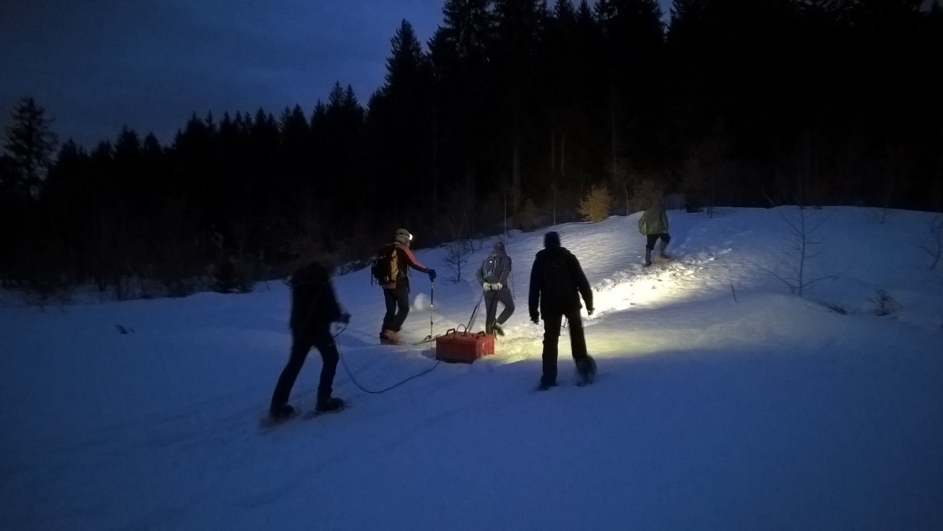
By combining fundamental and applied research, EVS helps shed light on today’s challenges related to natural and built environments. Its commitment to collaborative, structuring projects makes it a key stakeholder in supporting ecological, social, and economic transitions of