
The Materials in Interactions (MINT) department is dedicated to understanding the mechanisms governing the behavior of materials within complex ecosystems. Given the diversity of ecosystems, ranging from industrial to societal environments, the MINT department prioritizes multidisciplinary approaches.
Head
Jenny Faucheu
Email: faucheu@mines-stetienne.fr
Areas of Expertise
Core Competencies
- Materials physical chemistry
Physicochemical and micromechanical characterization of surfaces and interfaces - Durability of metallic materials in liquid and gas environments
Understanding damage mechanisms through experimental approaches combining physical metallurgy, mechanics, and electrochemistry (stress corrosion cracking, hydrogen embrittlement, corrosion fatigue) - Materials psychophysics
Instrumental and behavioral assessments of the visual and tactile properties of materials
Fields of activity
- Energy and transport
Corrosion prevention and improved durability of facilities.
Development of resistant materials for harsh environments. - Industrial design
Integration of perceived properties into the design of innovative products. - Circular economy
Desirability and acceptability of eco-designed and second-life materials
Research Areas
Material behavior in harsh environments
To extend the service life of materials, the physicochemical aspects of the interaction between materials and the surrounding ecosystem are studied in order to act on degradation mechanisms, using a predictive, preventive, or corrective approach.
The influence of materials in sustainable design
Within a circular economy approach, to promote sustainable product design, perceptions of materials are studied using qualitative and quantitative methods in order to act on the mechanisms of desirability and acceptability of eco-designed and second-life materials.
Physicochemical behavior of surfaces and interfaces
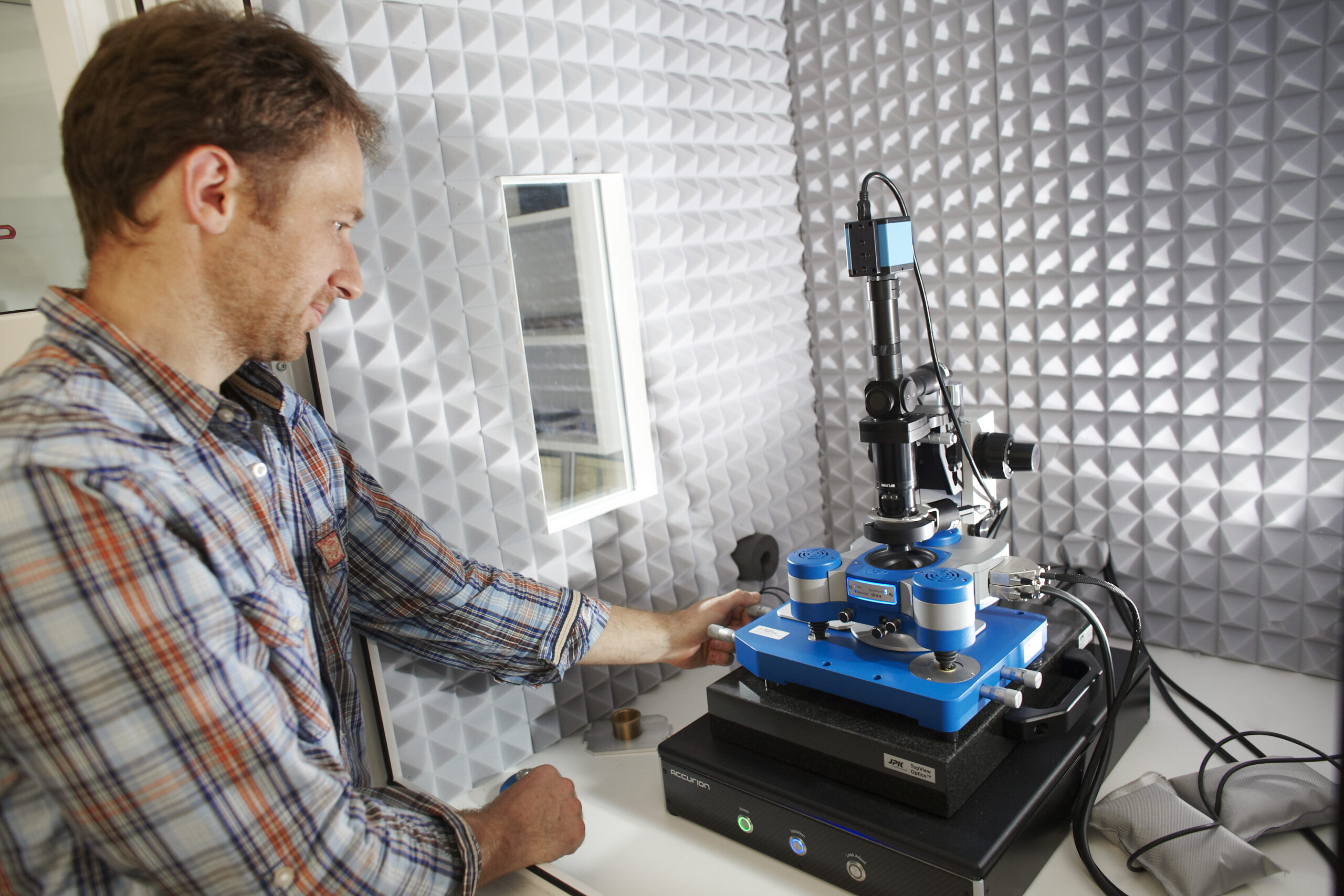
To improve material properties, surface behavior is studied using multi-scale approaches in order to establish relationships between formulations and overall effects. Specific experimental methods are developed for the chemical and micromechanical characterization of surfaces and interfaces, enabling modeling of their role in material processing methods.
Research unit
Through its affiliation with the Georges Friedel Laboratory (LGF), a joint research unit of Mines Saint-Étienne and CNRS, the MINT department promotes multidisciplinary approaches, thereby strengthening the impact and relevance of its work in addressing energy transition and sustainable innovation challenges. This collaborative framework creates a strong synergy between research and application, positioning it as a key player in industrial innovation, particularly in the energy, mobility, and environmental sectors.
Contact and Practical Information
- Head of Department
Jenny Faucheu - Email
faucheu@mines-stetienne.fr
- Address
École des mines de Saint-Étienne
Materials Science and Mechanical Engineering
158, cours Fauriel,
42000 Saint-Étienne, France - Transportation
Bus: Line 6, stop “École des Mines”