
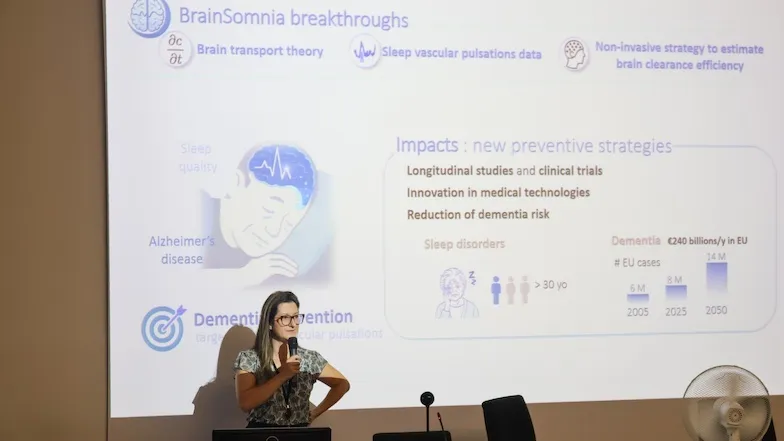
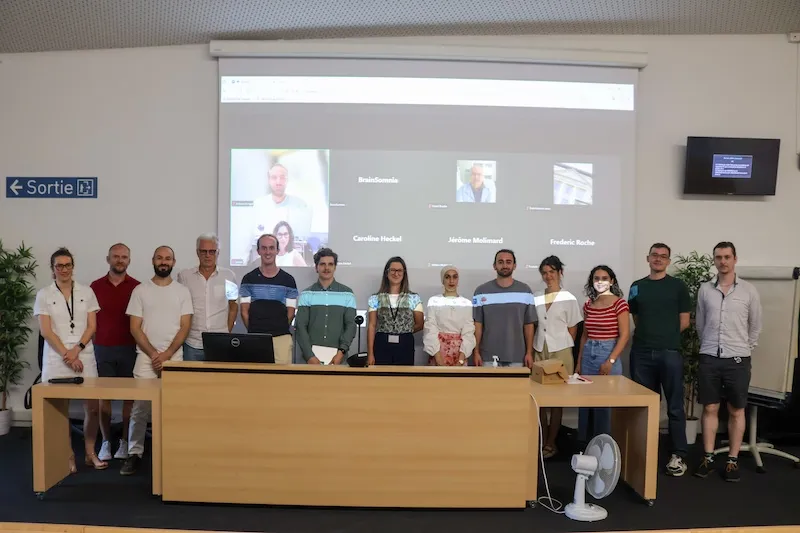
BrainSomnia was officially launched on 8 and 15 July: two events that presented the objectives and expected results of this project supported by the European Research Council, and showcased the progress of work carried out on complementary topics.
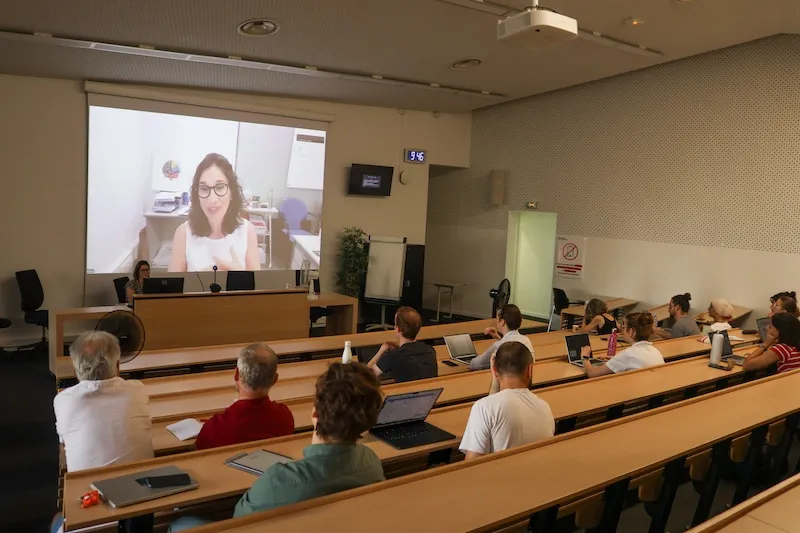
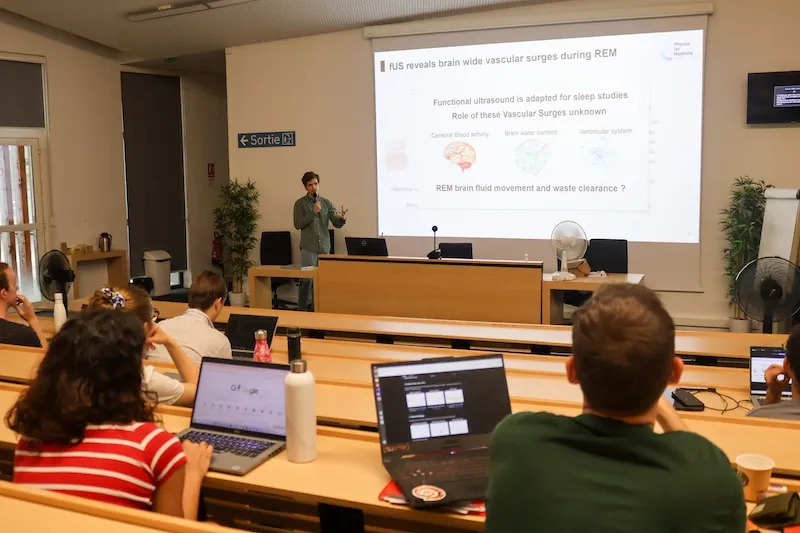
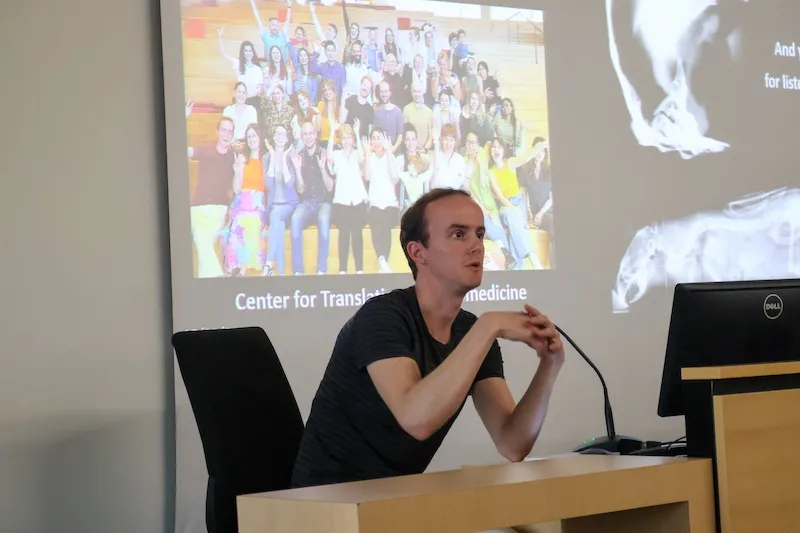
Organised at the Centre for Biomedical and Healthcare Engineering (CIS) at Mines Saint-Étienne, the BrainSomnia project kick-off meeting focused on clinical and preclinical research. The guest speakers’ contributions brought together perspectives and approaches on the effects of sleep on brain health, and the risks of developing a neurodegenerative disease.
€2 million awarded by the European Research Council
The BrainSomnia project builds on research conducted by Alexandra Vallet for several years. It aims to demonstrate the physical link between brain pulsations during sleep and brain clearance, in order to analyse their effects on the progression of neurodegenerative diseases such as Alzheimer’s disease.
To carry out this work, Alexandra Vallet has received a €2 million grant from the European Research Council (ERC): an award given to exploratory research projects, selected for their scientific excellence.
Understanding the mechanisms of brain clearance
Alexandra Vallet’s work lies at the intersection of biophysics, neurology and fluid mechanics. It focuses on the glymphatic system: intracranial pulsations that activate the cerebrospinal fluid in which the brain is immersed.
This circulation makes it possible to collect and eliminate toxins, thus playing a fundamental role in preventing neurodegenerative diseases.
Heartbeats, the respiratory cycle and the contractions/dilations of the muscles in the vascular walls directly influence the glymphatic system, which is more effective during sleep.
Alexandra Vallet would like to explore this topic further, which opens up new perspectives:
“Since the brain clears itself better during this period, we can imagine that improving the quality of nocturnal pulsations could become a new target for slowing neurodegenerative diseases”.
Through this project, Alexandra Vallet and her teams hope to better understand how sleep can influence brain health. BrainSomnia could thus open up new avenues to prevent or delay neurodegenerative diseases.