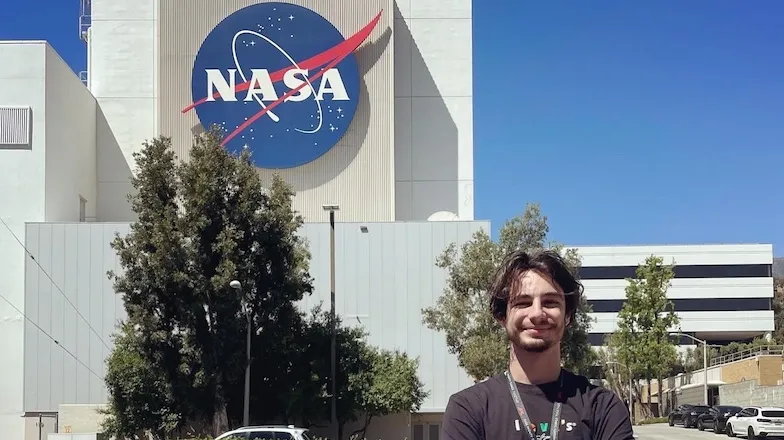
A recent graduate of Mines Saint-Étienne’s Ingénieur Civil des Mines (ICM) program, Evann Kurzawa has already made his mark on the history of space exploration. He has just published his research as lead author in The Astronomical Journal, capping off an extraordinary experience at NASA’s Jet Propulsion Laboratory (JPL) that led him to identify the most promising planets for showing signs of life in the 2030s.
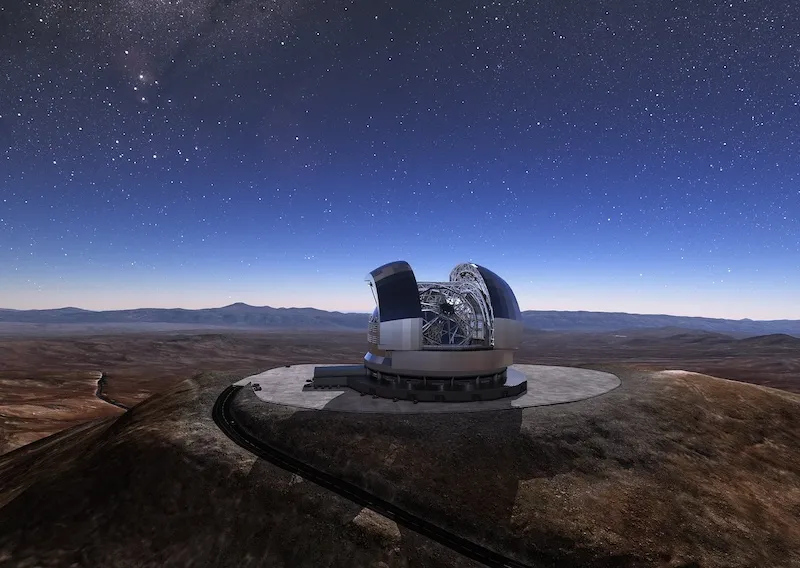
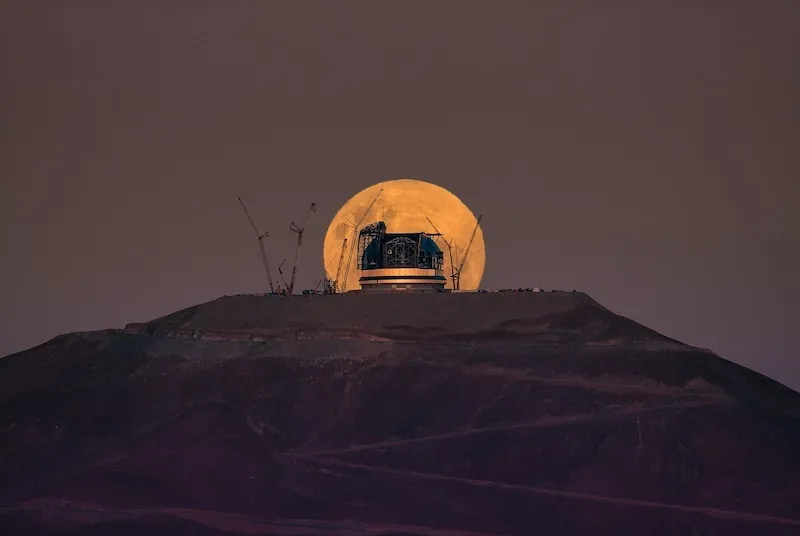
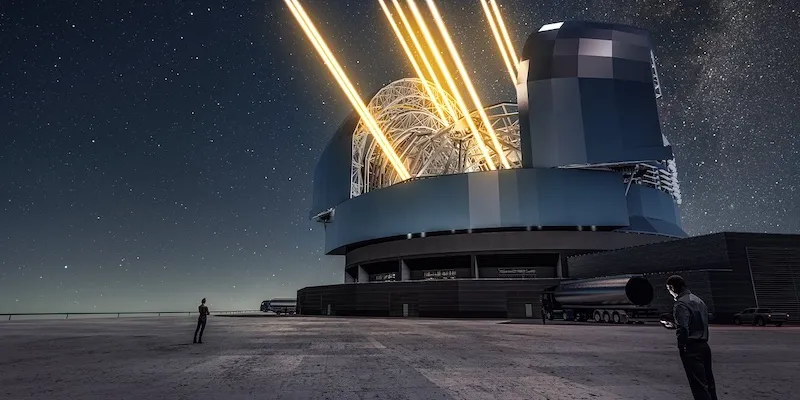
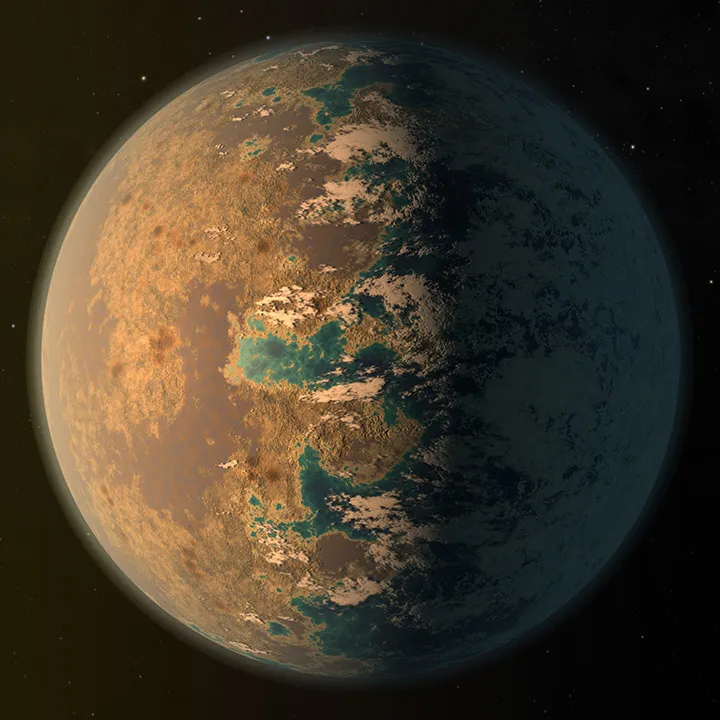
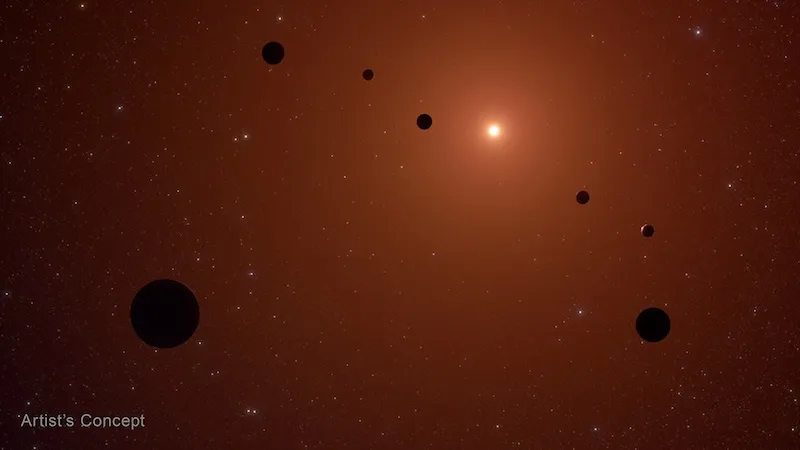
TRAPPIST-1 d and TRAPPIST-1 e… These two names refer to two planets that Evann Kurzawa has identified as the most likely to bring together all the conditions favorable to life. The young engineer reached this conclusion after two years of research at NASA’s Jet Propulsion Laboratory (JPL). This work will serve as a foundation for the use of the Extremely Large Telescope (ELT), the largest telescope in the world, set to come into service in 2023.
Now an engineer at ArianeGroup, Evann looks back on his remarkable journey.
Can you tell us about your background?
After earning a science baccalaureate, I completed a preparatory class in physics and chemistry at Lycée du Parc in Lyon, then joined Mines Saint-Étienne. I started working on concrete space projects as early as my first year, with the construction of a rocket with a classmate, Aldric Parent, for a national competition.
We had one year to design and build it, then launch it from a military base. The rocket completed its flight and mission successfully, and we learned a great deal. In my 2nd year, I took over as legal president of the Mines Space association, and I began my research at NASA in June 2024.
I continued this work during a gap year the following year, during which I also spent six months working at the European Space Agency in Germany.
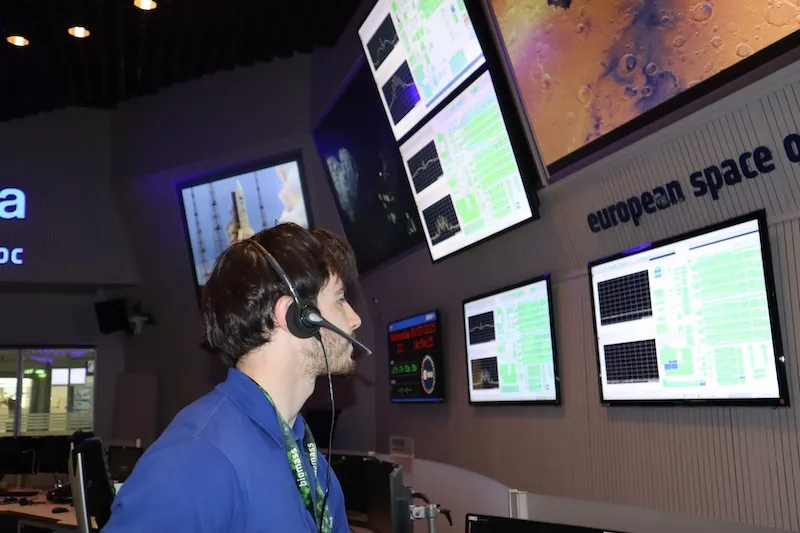
I was fortunate enough to take part, from the control room, in the launch and orbit insertion operations of a satellite. It was an absolutely unique experience.
In my 4th year, I finished my studies at Centrale Lyon and started an internship at ArianeGroup, while continuing my research work. I was recently hired at Ariane to work on spacecraft orbital maneuvers.
How did your internship at NASA’s Jet Propulsion Laboratory go?
The NASA JPL center is impressive. It’s a hub of innovation and history. Americans modestly call it the “Center of the Universe,” because it’s from this center that the communications network is coordinated, keeping contact with numerous space probes across the Solar System.
Working there is enjoyable and highly stimulating, because people from all over the world come together to study a wide range of subjects, all centered on exploration, discovery, and space. For me, it was a defining experience that confirmed my desire to build a career in the space sector.
In short, my job was to determine which exoplanets (planets outside the Solar System) should be observed with the future largest optical telescope in the world, in order to maximize our chances of discovering traces of extraterrestrial life.
This was a topic that already interested the scientific community, with observations planned for around 2030, but there was still a great deal of work to be done. My supervisors suggested I take it on, and that’s how my research project began!
Your work was the subject of an official scientific publication: can you tell us more about it?
Gladly! I originally went for a 2nd -year internship at NASA, with the goal of advancing this research topic. But a week before I was due to return to France, I obtained a major initial result. I rushed to show it to my supervisors! They then suggested I continue the work remotely, with weekly meetings, with the aim of publishing the results once the project was complete.
What I thought would be a short project ended up lasting more than two years of continuous work, alongside my studies and other professional experiences. At the end of those two years, we arrived at a list of exoplanets to observe starting in 2030, in order to maximize our chances of finding atmospheric traces of life.
These planets are habitable, and we showed that, for some of them, realistic observation campaigns could make it possible to find “biosignatures” (potential traces of life).
NASA then offered to cover the open-access publication fees, which can reach several thousand dollars in scientific journals. We ultimately worked with the publisher for several months before the article was published.
Today, my work is available in The Astronomical Journal and accessible to everyone !
Is space research a childhood dream?
I remember that in eighth grade, my physics teacher explained to us that matter was made up of particles invisible to the naked eye, and that everything around us was made of these same building blocks. That idea had a strong impact on me. I think that’s the moment I truly wanted to understand how the world worked, and I knew I wanted to study science.
Later, I became especially interested in space, because it’s a field that touches on some of the greatest unknowns in our understanding. The Universe surrounds us, yet we actually know very little about it on its scale. And what fascinates me is that the more we discover, the more we realize how little we know.
It’s this mix of mystery, discovery, and still-unanswered questions that completely captivated me. Today, I know this is a field I want to commit to in the long run, one to which I’d like to dedicate my professional life.
Now that you’ve graduated from Mines Saint-Étienne, what are your plans for the future?
I’ve just joined ArianeGroup as an engineer. I plan to stay there for a few years to deepen my knowledge of launch vehicles and spacecraft, and gain experience. Meanwhile, I may continue working on habitable exoplanets, should the opportunity arise.
In the end, whether it’s building vehicles to travel into space or seeking to better understand the worlds found there, the idea remains the same: to contribute, in my own way, to exploring a little more of this Universe we know so little about.
Thank you, Evann, for sharing your experience, which may well inspire other engineering students at Mines Saint-Étienne!