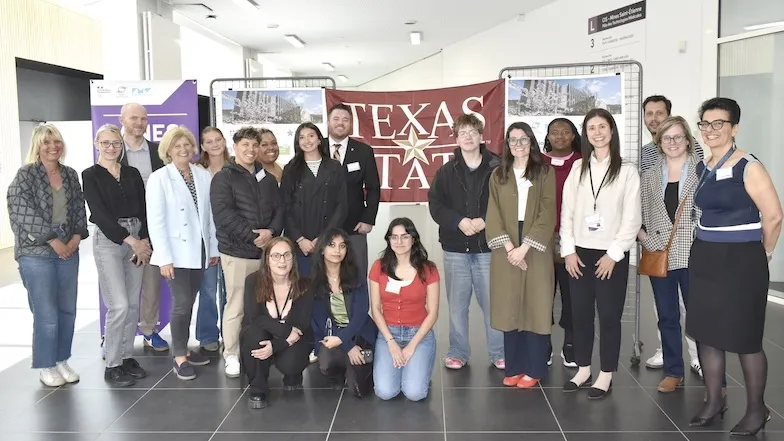
From May 18 to 29, students, researchers, and professionals shared an ambitious and interdisciplinary programme focused on healthcare engineering, digital health, and the innovations that will transform the healthcare systems of tomorrow.
Combining international collaboration and hands-on learning, this programme immersed participants in the real-world challenges of the healthcare sector through lectures, team activities, and a hackathon.
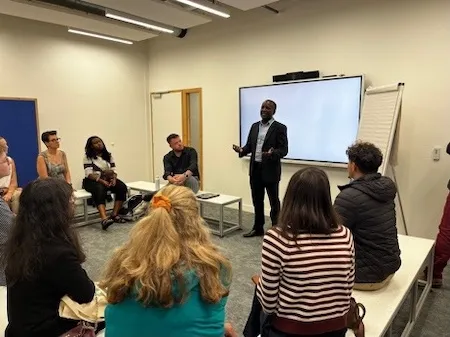
A pilot cybersecurity simulation exercise was conducted at the WHO Academy’s state-of-the-art simulation centre in conjunction with WHO experts from the Department of Data, Digital Health, Analytics, and AI in Geneva.
This collaboration with the WHO Academy is exemplary for the development and dissemination of educational materials for healthcare professionals worldwide.
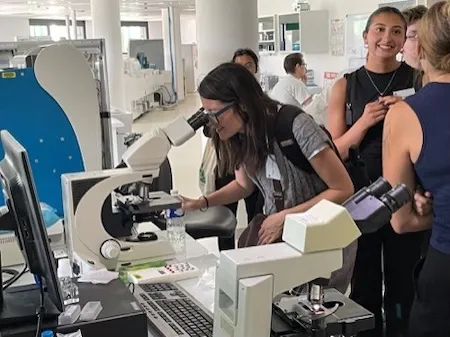
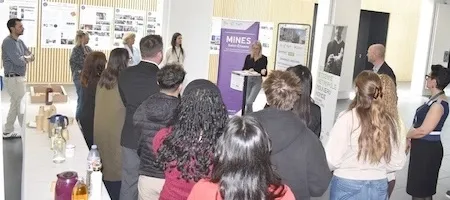
Another unique highlight for the participants was the visit to the Villefranche-sur-Saône Hospital Centre. In addition to a tour of the laboratories and pharmaceutical departments, they were able to discover the digital health tools and AI implementations deployed at the hospital.
The programme concluded with a 48-hour no-code hackathon where students had to tackle real digital health challenges proposed by our industrial partners.
Children’s Health set two challenges regarding AI literacy for healthcare professionals:
- How can AI and digital literacy be strengthened among healthcare professionals to enable safe, effective, and confident use in clinical practice?
- How can digital or virtual solutions be leveraged to significantly improve the work of healthcare professionals without compromising the safety and quality of care?
The start-up DALI contributed an additional challenge regarding smart hospitals:
- How can secure and interoperable AI dashboards optimize emergency department resources while ensuring high staff adoption and reproducibility?
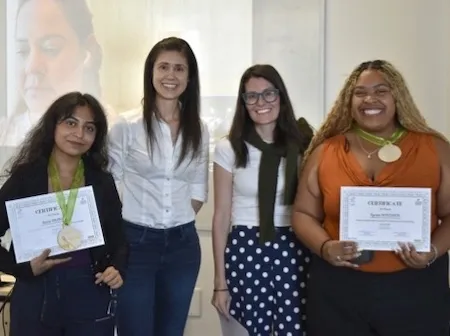
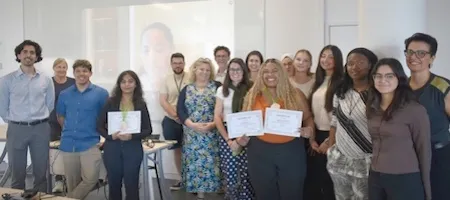
Congratulations to Unsia Shakeel, Syraia Willrich, and Kevin Jung for designing the winning solution!
A wonderful illustration of what international cooperation can produce at the intersection of technology, research, and societal impact.
The SHIFT Summer School programme, “Shaping Health Innovation for the Future of Technology,” is developed and organized by Julia FLECK, Mines Saint-Étienne, in collaboration with Elise LAMBERT, Texas State University.
It is supported by the Auvergne-Rhône-Alpes Region and Saint-Étienne Métropole, in partnership with the WHO Academy and Novéka.
Well done to the participants, speakers, and organizers, and thank you to the teams involved.
The Centre for Biomedical and Healthcare Engineering is already preparing for the 2nd edition in 2027.