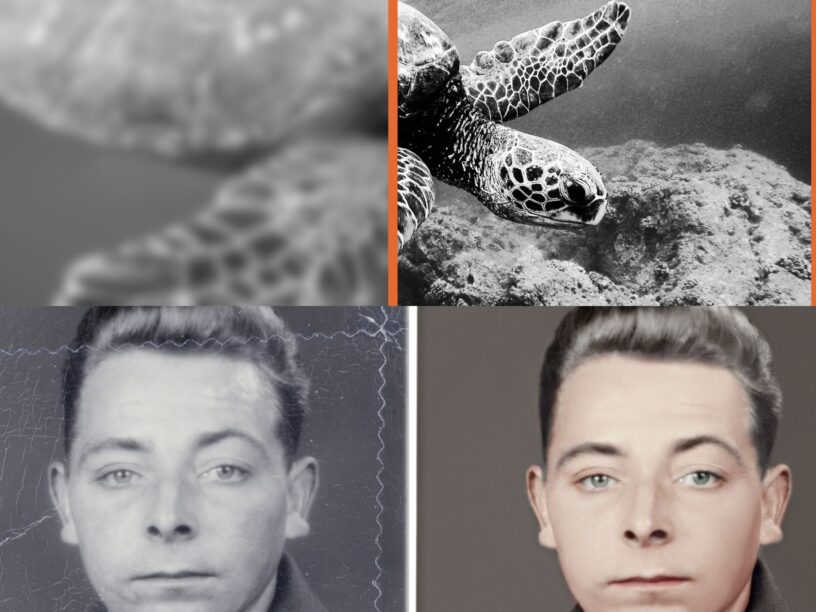
On March 1st, 2021, on the FUN MOOC platform, Mines Saint-Étienne is launching, in partnership with Télécom Physique Strasbourg Engineering School of the University of Strasbourg, the “MOOC: Introduction to Image Processing.” Objective: discover the mathematical and computational foundations of image processing and analysis.
The MOOC aims to meet the challenges posed by image processing today. Indeed, images are present everywhere in our society (from production lines to medical scanners and satellites) and in numerous scientific and technical fields (mathematics, physics, computer science). However, to fully leverage images, especially under poor acquisition conditions, they must be processed, with the ultimate goal of isolating relevant objects and analyzing them. Filtering, enhancement, and noise removal are the starting point of the analysis chain. These steps enable, for example, diagnostic assessments in medical imaging, detection of defective parts on a production line, or license plate recognition by speed cameras.
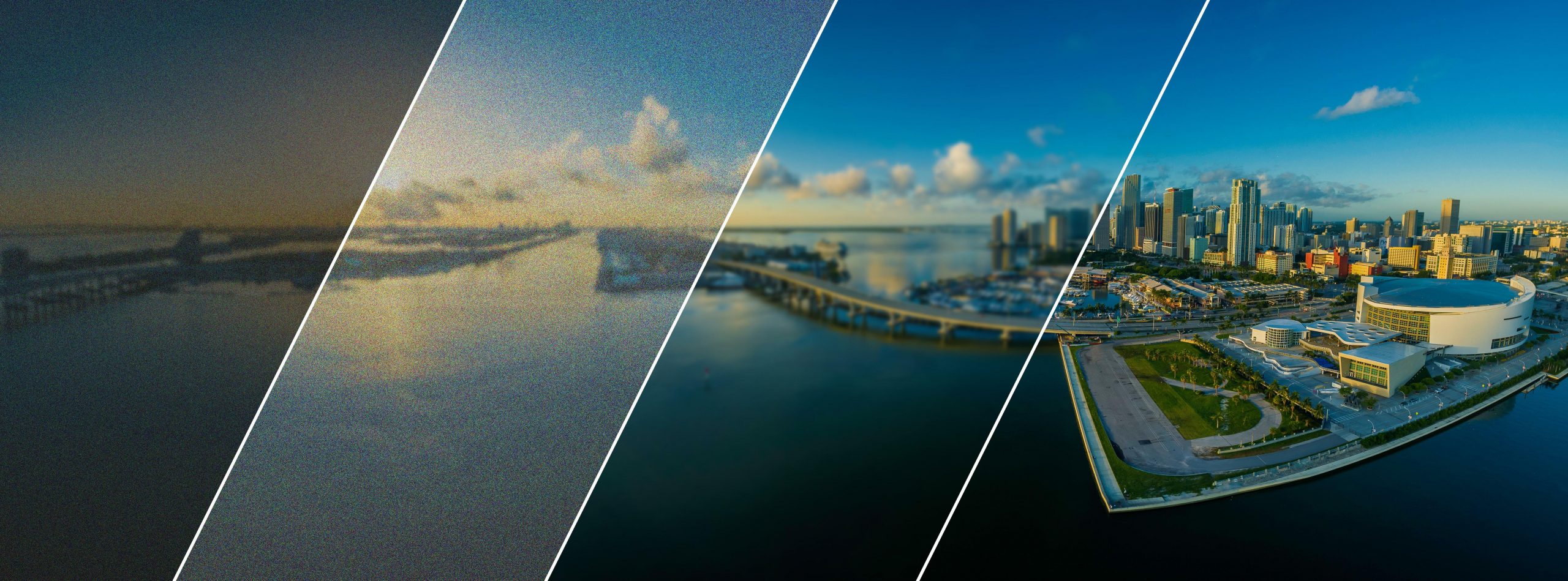
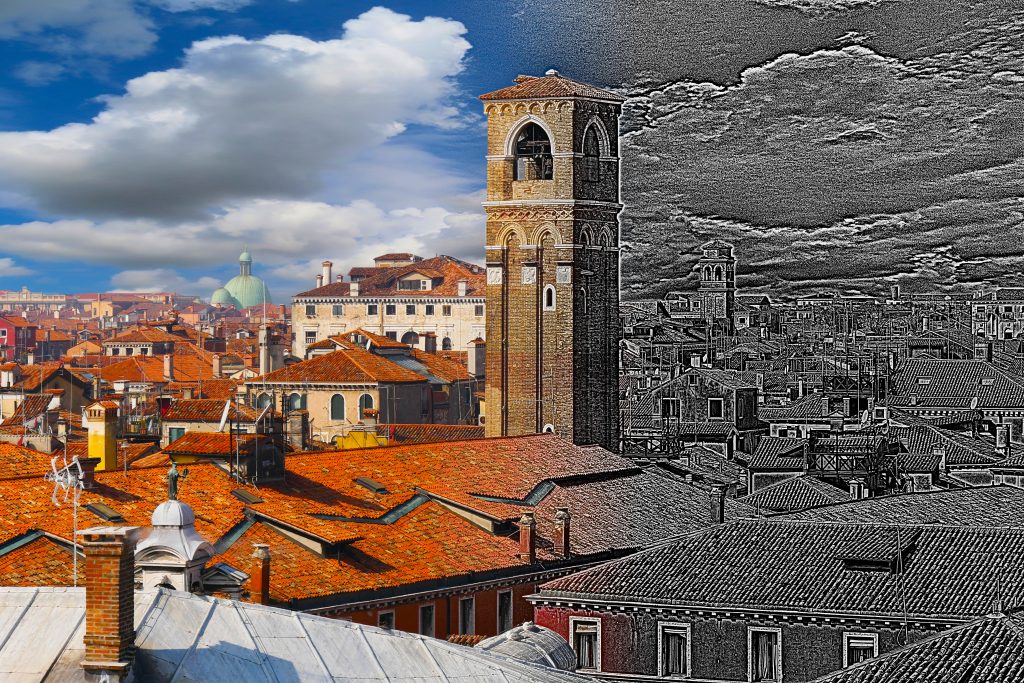
The MOOC: Introduction to Image Processing offers an introduction to the necessary foundations in mathematics and computer science using the Python language, manipulating algorithms and programming elementary operations: loading and viewing an image, analyzing its quality, improving its sharpness and contrast, adding blur, or detecting edges.
To validate your learning, assessments are offered each week through quizzes and practical exercises in an innovative online programming environment. Successful completion of the exams will determine whether you receive the certificate of completion issued by FUN-mooc.
Are you a student or professional with knowledge of Python programming who wishes to apply it to image processing?
Join the MOOC: Introduction to Image Processing. To make the most of the exercises and lessons, prerequisites are necessary. It is recommended to have foundations in mathematics: integration and differentiation, probability and statistics (mean, standard deviation, variance, random variable, normal distribution) and in computer science (basics of the Python programming language, ability to write loops, logical operators, operation vectorization, function definition, arrays and numpy).
During the MOOC, meet Yann Gavet, professor of image processing and analysis at Mines Saint-Étienne; Vincent Mazet, associate professor of signal processing and image processing at Télécom Physique Strasbourg; and Karine Richou, instructional engineer at Mines Saint-Étienne. Also listen to Naëlle, the voice that will accompany you throughout the MOOC.
The MOOC is funded by Institut Mines-Télécom with support from the Patrick and Lina Drahi Foundation.
Course Outline
- Week 1: Context and application fields, history and mathematical foundations
- Week 2: Convolution filtering, edge detectors
- Week 3: Enhancement, histogram manipulation
- Week 4: Noise processing
Join us on March 1st, 2021, and register now!
5 reasons to take the MOOC: Introduction to Image Processing