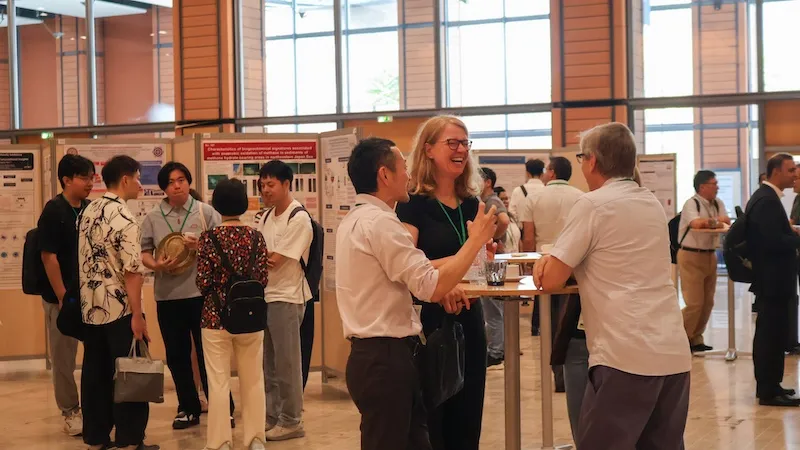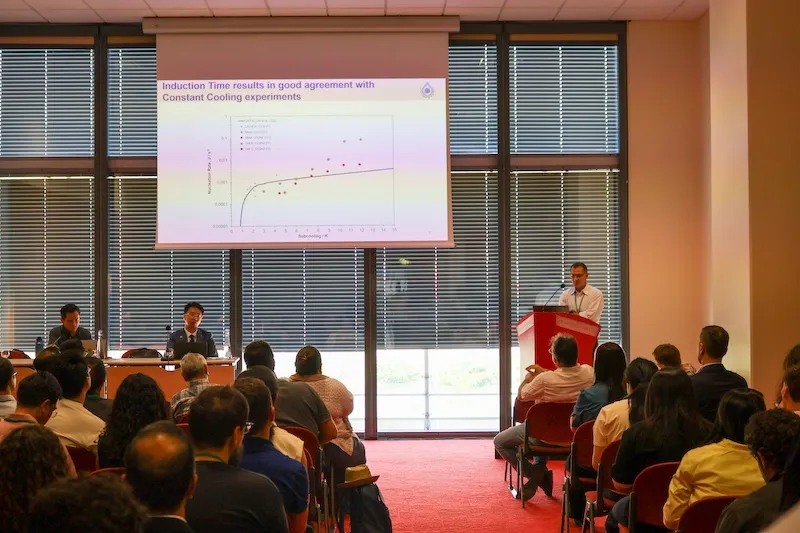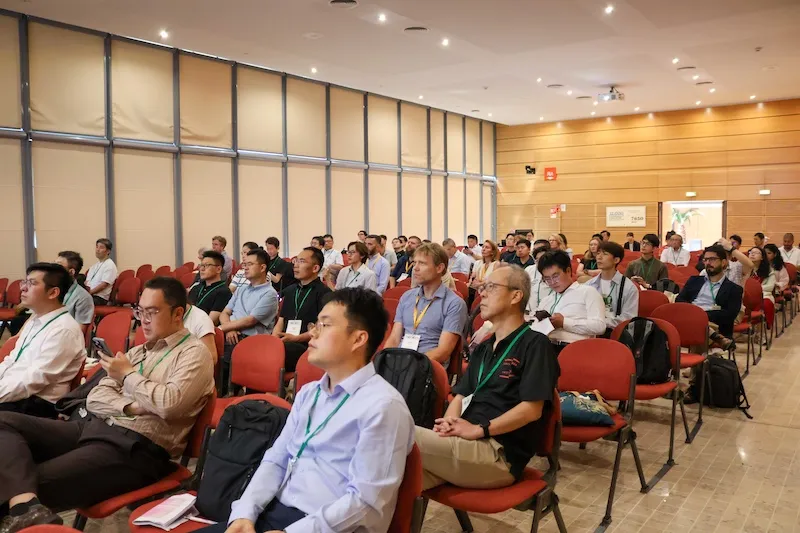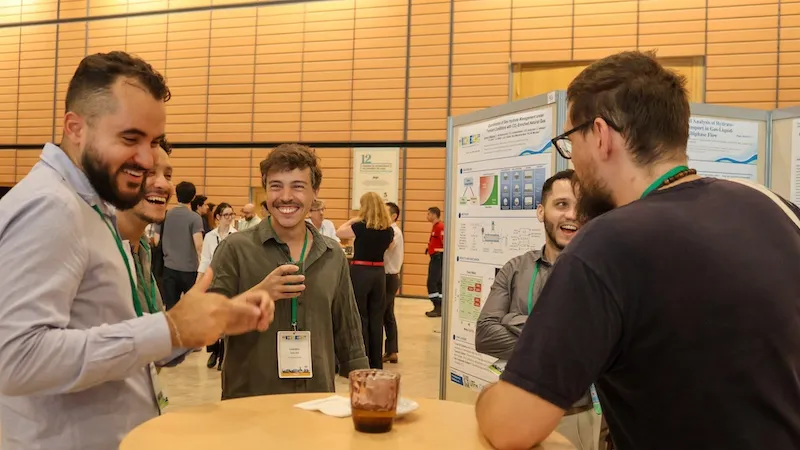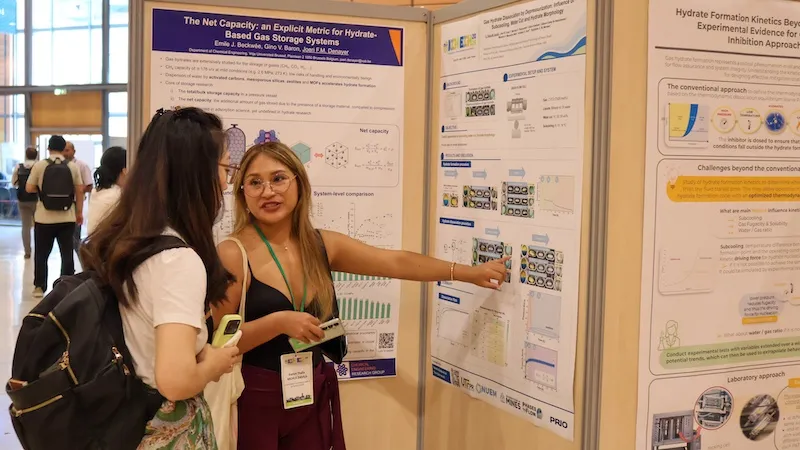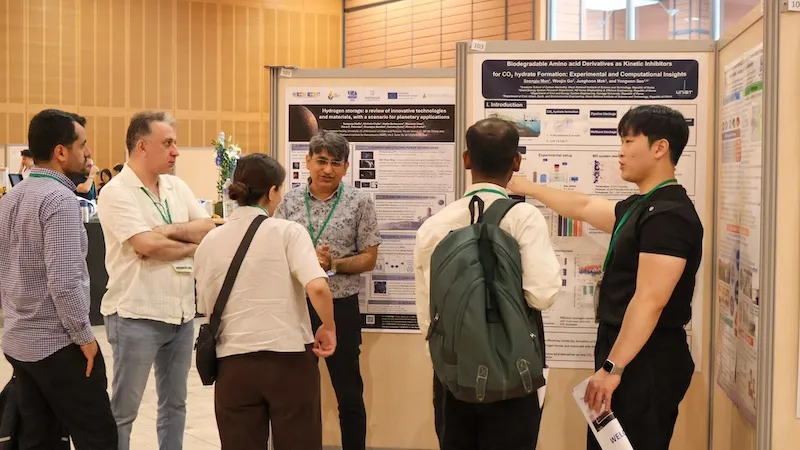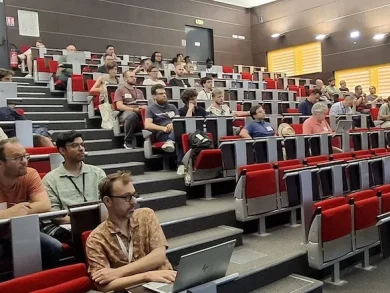
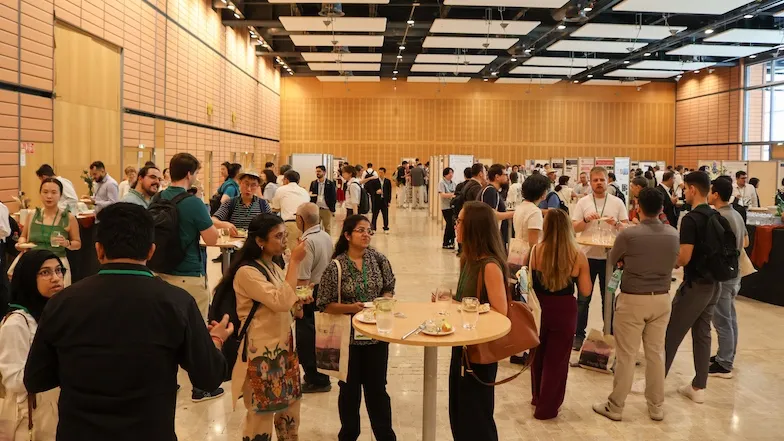
Mines Saint-Étienne’s SPIN research centre jointly organised the International and European Conferences on Gas Hydrates, from 29 June to 3 July. 500 participants gathered at the Lyon Convention Centre to review advances in research on clathrate hydrates and their applications in the context of the energy transition.
Coming from all over the world, the leading experts on gas hydrates – or clathrate hydrates – presented their projects during thematic sessions. The conference thus made room for 300 talks and 200 presentations, sparking many discussions and fostering new collaborations.
The success of this edition is the result of two years of preparation led by the SPIN centre, notably Sophie Magand, Baptiste Bouillot, Jean-Michel Herri and the postdoctoral researchers. The next event will take place in three years, in South Korea.
A major energy transition topic
This 11th edition of the ICGH conference was marked by the growing importance of topics related to the energy transition, due to the properties of clathrate hydrates. These crystalline materials, resembling ice, can store gases, notably carbon dioxide and methane.
Clathrate hydrates occur naturally on Earth, particularly in Arctic regions or at great ocean depths. They pose a challenge for the exploitation of fossil energy deposits, as the formation of clathrate hydrates blocks subsea pipelines, and their melting releases methane into the atmosphere.
The SPIN centre has been working on clathrate hydrates for more than 30 years. Under the leadership of Jean-Michel Herri, it was a pioneer in developing positive technologies, such as gas storage, air conditioning and water purification.
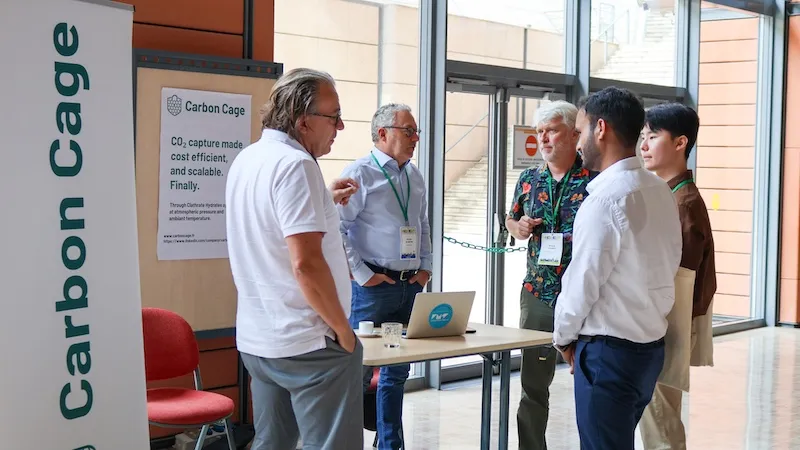
This work also gave rise to Carbon Cage, a start-up incubated at Mines Saint-Étienne, which offers a CO2 capture technology based on clathrate hydrates.
Positive applications now account for an essential share of the research. They represented half of the projects presented at the ICGH conference, and should continue to grow.