Mines Saint-Étienne is strengthening its commitment to biodiversity preservation. The School has just signed a partnership with the French Bird Protection League and has obtained the “LPO Refuges” label for its two campuses. This partnership aims to support the actions already implemented by the School in terms of sustainable development.
Mines Saint-Étienne made a three-year commitment in 2020, in partnership with the French Bird Protection League (LPO), to implement ecological management favorable to biodiversity on its land holdings. The work and presence of the LPO alongside our institution enables Mines Saint-Étienne to approach its eco-responsible management of green spaces with the effective and pragmatic support of relevant stakeholders and committed experts. This partnership has enabled both School campuses (Saint-Étienne and Gardanne) to be labeled “LPO Refuges” for a period of three years.
Initially, targeted representative wildlife inventories were conducted on the ten hectares of the Saint-Étienne and Gardanne campuses (Campus Georges Charpak Provence). They reveal the presence of around twenty bird species, the majority of which are nesting species, numerous lepidopteran and orthopteran insects, as well as dragonflies, mantises, cicadas, red squirrels, and various lizards.
This biodiversity richness is notably explained by Mines Saint-Étienne’s commitment to banning the use of chemical phytosanitary products for over ten years in order to manage its green spaces responsibly.
Prior to its commitment with the LPO, Mines Saint-Étienne had already implemented actions that have proven effective and will be reinforced and supplemented:
- Flowering fallow land, to promote floristic biodiversity and the presence of insects, particularly pollinators;
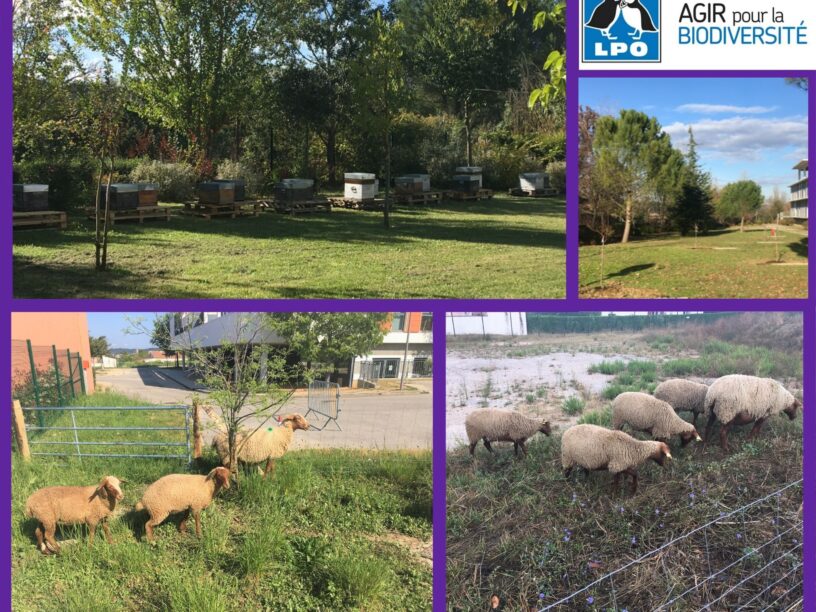
- Experimental eco-grazing, using sheep of the Provençal “Mourérous” breed, a typical Provençal breed endemic to the southern Alps (Campus Georges Charpak Provence);
- Targeted installation of insect hotels, to promote their presence as well as that of birdlife.
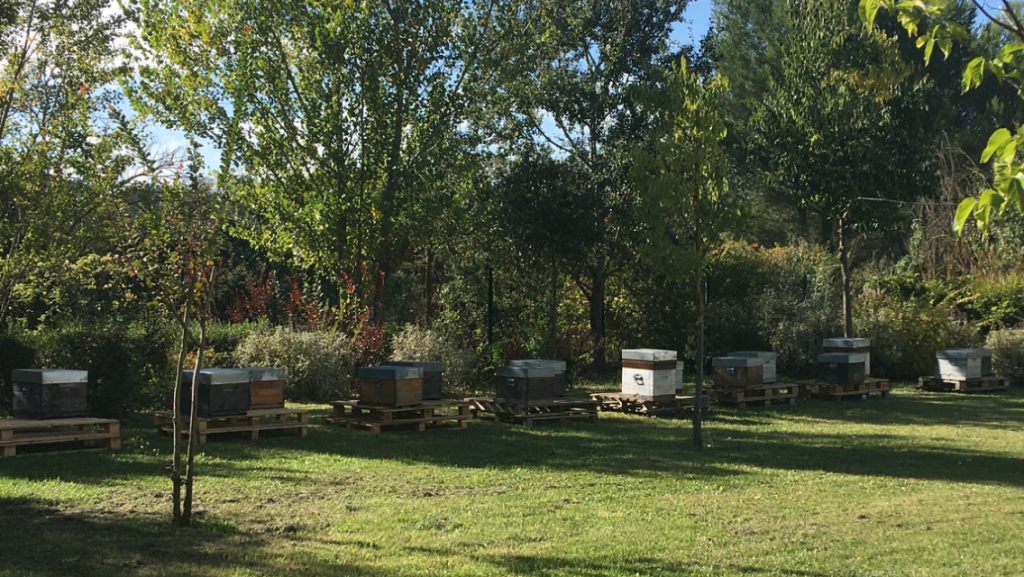
- Installation of beehives, to stimulate pollination and plant diversity.
Other complementary actions are currently under evaluation (aquatic areas, stone or wood installations to promote the presence of gastropods and small reptiles, etc.). Additionally, fruit trees have been planted on the Campus Georges Charpak Provence.