Following the Call for Research and Intervention Projects to Reduce and Combat Smoking issued by the French National Cancer Institute (INCA Call for Proposals), the Centre for Biomedical and Healthcare Engineering has been awarded two projects on electronic cigarettes, including a clinical study in partnership with Saint-Étienne University Hospital. Several postdoctoral researchers will be hosted as part of this initiative.
“Nicotine salts: toxicology and pharmacology”
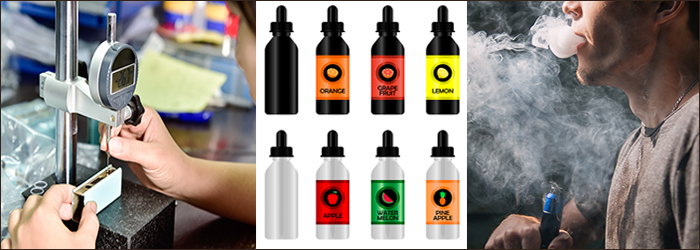
Recent developments in e-liquid formulation and vaping equipment have emerged on the French market with the widespread adoption of nicotine salts and POD technologies.
These new trends raise specific health concerns (the pulmonary toxicology induced by the addition of organic acids in vaporized e-liquids is poorly documented); questions relating to addiction or cessation, as well as regulatory issues (organic acids could alter the pharmacokinetic profile of inhaled nicotine).
This project will be conducted in partnership with Sigma Clermont, Jean Monnet University and Saint-Étienne University Hospital and will bring together metrologists and engineers, aerosol chemists, biologists and toxicologists, pharmacists and tobacco specialists.
It will thus provide robust scientific knowledge, independent of both the tobacco and vaping industries, to address public authorities’ questions: on the emergence of nicotine salt vaping products on the French market, on their toxicological implications (in vitro assessment) and on their pharmacological impact (in vitro and in vivo studies).
School vaping
The prevalence of smoking among 17-year-olds in France has been declining since 2000. In this context, electronic cigarettes could play a beneficial or detrimental role in adolescents’ “initiation” to tobacco. It is therefore necessary to monitor the prevalence of experimentation and use associated with these two products, by conducting observational studies and usage trajectory studies among French adolescents.
Building on methodologies already proven on a smaller scale or with other populations of interest, the researchers propose a pilot project on the relationships between vaping and smoking among tenth-grade students through three phases: observational study, usage trajectory study, and health education.
This second scientific project, conducted in partnership with Lyon 1 University, INSERM, La Rotonde and the Regional Education Authority, is also highly interdisciplinary. It will bring together researchers in human sciences and education, physicians, and engineers specializing in vaping and smoking.
These two studies, lasting 4 and 2 years respectively, with total funding of €633,000, will begin in April 2020. They are part of the “Determinants, trajectories, and action levers on tobacco-related behaviors in the general population” component of the French National Cancer Institute.
Our warmest congratulations go to the scientific teams for securing these projects!
Contact: Jérémie Pourchez, “future health” mission officer, Centre for Biomedical and Healthcare Engineering