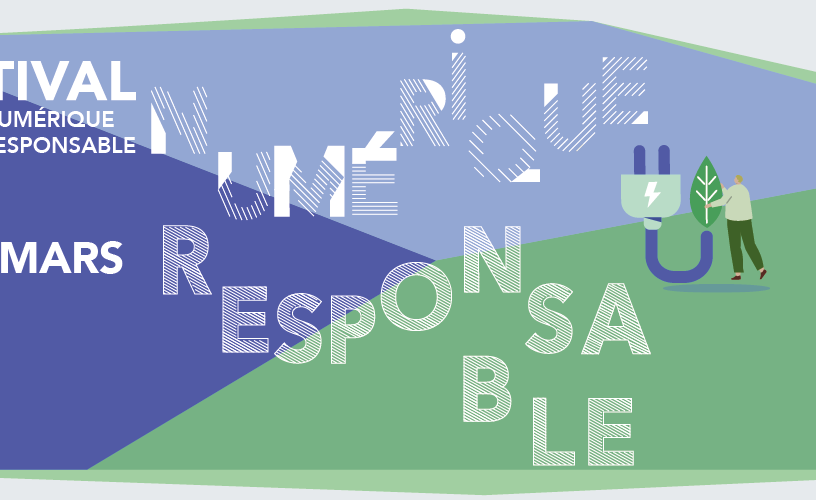
True to its ambition of being a responsible engineering school and a driver of innovation with societal impact, Mines Saint-Étienne is organising this year a “Responsible Digital Festival” from 11 to 22 March 2024.
This event has effectively become a true “festival” thanks to the quality and diversity of its speakers and the topics covered throughout this two-week period.
Proudly rooted in its local area, the School is offering activities open to everyone on this occasion: talks, a radio discussion, workshops for children, exhibitions, etc. External contributions will take place by videoconference using sovereign tools with a controlled environmental impact, in order to remain consistent with the theme.
We will also highlight the many actions already carried out and the action plan that enabled Mines Saint-Étienne to become one of the first engineering schools to be awarded the “Responsible Digital Level 1” label in June 2023 by the Institut du Numérique Responsable (INR).
This event is intended as a time for reflection on digital technology: its contributions and its societal, geopolitical and environmental impacts. This festival is aimed at everyone, with a particular focus on our students, who will need to be ambitious and responsible in order to help build a future in which technology remains, above all, at the service of humanity.
Digital Cleanup Days
- From Monday 11 to Friday 22 March
- Raising awareness among Mines Saint-Étienne staff
The Responsible Digital Festival offered by Mines Saint-Étienne takes place during the national “Digital CleanUp Day” campaign, organised this year from March 11 to 16, 2024.
On this occasion, the School will offer its students and staff the now traditional “spring data clean-up” challenge, which last year made it possible to reduce our data volume by 2.03 TB.
Alongside cleaning up mailboxes, this year we will emphasise cleaning all data stored on shared drives, in order to migrate all of the School’s data over the course of the year to centralised, secure storage with a significantly reduced environmental impact compared with the current setup.
Link to the initiative: https://digital-cleanup-day.fr/.
Donations of IT equipment no longer used in the School’s activities will also be made during the Digital Cleanup Days.
Conferences
ADEME
- Monday 11 March, 12:00–12:45
- Videoconference link
- Marie-Line Verne, Communications Manager for responsible digital campaigns at ADEME since 2021
As an introduction to the Responsible Digital Festival, ADEME will present key figures as well as the major digital challenges for the years ahead. This will be an opportunity to provide an overall overview of the impacts of digital technology and to suggest some everyday actions.

IT Department Tuesdays
- Tuesday 12 March, 12:00–12:45
- Videoconference link.
- Internal event for School staff
- Information Systems Department of Mines Saint-Étienne
On the second Tuesday of each month, the IT Department (DSI) of Mines Saint-Étienne meets with the School’s staff to discuss and present a digital tool. For this second edition of the DSI Tuesdays, the topic will be the presentation of the e-parapheur, the new electronic signature system. The implementation of the ESUP-Signature tool is part of the School’s responsible digital approach, as it offers a simple and intuitive interface for electronically signing the many internal documents that still, to this day, require multiple printouts. In addition, this Open Source dematerialisation solution is supported by the higher education community, led by the University of Rouen within the ESPUP consortium.
“Responsible digital practices at home”
- Wednesday 13 March at 5:30 PM in lecture hall F1, at École des Mines de Saint-Étienne, 158 cours Fauriel, Saint-Étienne
- Videoconference link
- For the general public
- Amandine Guyot, workshop facilitator at COLORI & Sales & Marketing Director at WEBQAM
Being a parent in the digital age: the place of screens in our lives and in our children’s lives. Identifying and understanding problematic uses, the causes of these uses, the individual and societal consequences, and finally best practices and solutions for a calmer family use of digital technology.

“For acceptable and decolonial digital technology“
- Thursday 14 March, 12:00–1:00 PM, in lecture hall F1, at École des Mines de Saint-Étienne, 158 cours Fauriel, Saint-Étienne
- Videoconference link.
- Agnès Crepet, Head of Software Longevity and IT at Fairphone. Fairphone is a social enterprise that created an ethical, modular and repairable smartphone. Agnès Crepet co-founded Ninja Squad in France, which uses and promotes Open Source and publishes IT books with pay-what-you-want pricing. She is also actively involved in various communities. She co-founded MiXiT, an annual Tech event in France since 2011, with nearly 1,000 participants and speakers, which works for greater diversity and ethics in Tech. She has also been on the board of Duchess France since 2010, which makes women in IT more visible.
The digital revolution is underway and promises us an ever-better future for people and the planet. Yet while its environmental cost is beginning to be assessed and criticised, it is also responsible for societal and geopolitical issues that are still little known, but just as worrying.
From mineral extraction to end of life, digital technology is a revolution that is far from delivering on all its promises of a bright future, and relies on the exploitation of people in Africa, Asia and South America (Monange and Flipo, 2019). All is not lost, however, and together we will see how, as technicians but also as consumers and citizens, we have a role to play in promoting acceptable and decolonial digital technology (Casilli, 2017). We will try to answer this through the case studies of Fairphone, a social enterprise creating a modular and repairable smartphone, therefore more environmentally virtuous and respectful of the people who manufacture it.

“Artificial intelligence and the environment: a symbiosis?“
- Monday 18 March, 12:00–12:45
- Videoconference link
- For the general public.
- Victor Charpenay is a computer science researcher and Associate Professor at Mines Saint-Étienne. His research focuses on the formal representation of knowledge and its use in cyber-physical systems. He co-leads the “Sustainable AI” track within the Data & AI scientific community of IMT.
For several years, AI has often been cited as a solution in the fight against climate change, yet it is also criticised for its growing impact on the environment. Is the relationship between AI and environmental preservation mutually beneficial, neutral… or parasitic? The talk will provide an overview of work carried out at IMT at the intersection of the two.

“Countering the environmental impacts of large digital infrastructures: levers, AI and life cycle”
- Tuesday 19 March, 12:00–12:45
- Videoconference link
- Laurent Lefevre is a research scientist at INRIA within the LIP laboratory at the École normale supérieure de Lyon. He works on energy efficiency and reducing the environmental impacts of large digital infrastructures: computing centres, data centres, clouds and Internet networks. He is Deputy Director of the CNRS GDS EcoInfo, which focuses on digital eco-responsibility.
- Mathilde Jay graduated from IMT Atlantique (distributed systems specialisation) in a dual degree with EURECOM (data science specialisation) and is in her third year of a PhD at Université Grenoble Alpes. She is a member of the LIG (UGA) and LIP (ENS Lyon) laboratories and the Grenoble AI institute (MIAI). She is interested in the environmental impact of deep learning, whether computations are performed in data centres or closer to users.
- Adrien Berthelot, a computer science graduate specialising in systems & networks from Université Lyon 1, is currently pursuing a PhD at ENS de Lyon in partnership with the consulting firm OCTO Technology. His research focuses on the environmental impacts of digital services. Using methods such as life cycle assessment, he works to characterise the link between uses and impacts in digital technology.
If you think the cloud is immaterial, that AI has no impact, and that computers only consume electricity, this presentation is for you. Digital technology can be part of the solution, but it is also part of the problem… In this talk, we will address measuring the environmental impact of digital technology, from hardware production to end of life, including its use. We will provide an overview of various research efforts to mitigate certain impacts by orchestrating the right levers. We will also focus on the surge in the use and impacts of artificial intelligence.


“Mass digitisation: overlooked social impacts”
- Wednesday 20 March at 12:30 PM in lecture hall A022 at Espace Fauriel, 29 rue Pierre et Dominique Ponchardier, Saint-Étienne
- Videoconference link.
- For the general public
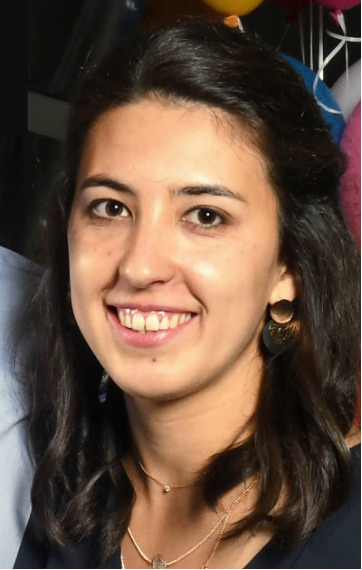
- Jean-Philippe PEYRACHE, computer science lecturer at Université Jean Monnet, journalist and member of the Halte au contrôle numérique collective.
- Pascal BONNARD, lecturer-researcher in political science at Université Jean Monnet and member of the Halte au contrôle numérique collective.
Over the years, the use of digital technology has become the norm for an increasing number of procedures, including within public administrations.
However, this trend is not without consequences for individuals and society as a whole, both because of the “digital divide” and all that it entails, and because of the model of society that is emerging through increased reliance on algorithms in all circumstances.
It therefore seems necessary to anticipate the impacts of digitisation as effectively as possible, so that it benefits everyone and does not become an additional factor of exclusion.
“Artificial Intelligence & Federated Learning”
- Thursday 21 March, 12:00–12:45
- Videoconference link
- For the general public.
- Guillaume Muller, Associate Professor at Mines Saint-Étienne. His teaching and research focus on machine learning and cybersecurity.
For several months, AI has been making headlines in every newspaper, both for the benefits it brings and for the downside: whether in terms of energy consumption or (lack of) respect for users’ privacy. Yet many researchers are working to address both issues, notably through a general framework known as “federated” learning. We will briefly present this concept, as well as the challenges addressed by the community in general and by researchers in Saint-Étienne in particular.

Podcast
Responsible digital technology
Ricochets, La Rotonde podcasts
- Tuesday 12 March, 6:00–8:00 PM at Studio Papaï at École des Mines, 158 cours Fauriel, Saint-Étienne.
- Recording open to the public, free admission.
- Speakers:
- Jacques Fayolle, PhD in computer science and Director of École des Mines de Saint-Étienne.
- Frédéric Peyrard, Agile Co-President of Doing, a company specialising in innovative digital ecosystems, and of Digital League.
- Agnès Crepet, Head of Software Longevity and IT at Fairphone.
- Dominique Berthet, Director of Information Systems and Head of Information Systems Security at École des Mines de Saint-Étienne.
- Podcast page
For digital technology, as for many human activities, the question arises of uses and of controlling consumption and tools.
What is responsible digital technology? How can a digital company take up this issue? At what levels can an engineering school commit?
The aim will be to understand what we are talking about: how private or public organisations act, and which paths to take to responsibly reduce the impact of these technologies, true companions of our professional and private lives!

Exhibitions
Ethical digital technology
- From 11 to 22 March at École des Mines: 158 cours Fauriel in Saint-Étienne and at the Aix-Marseille-Provence campus, 880 route de Mimet in Gardanne.
- For the general public.
- Produced by: Institut de la gestion publique et du développement économique (IGPDE) under a Creative Commons licence.
An exhibition “Virtual world, real pollution: the little-known journey of our digital devices“. 6 panels to explore the origins of digital pollution, smartphone manufacturing, data usage and the end of life of devices (waste treatment).
Workshops
Responsible digital workshops for children
- Wednesday 13 March – 2 sessions of 1 hour 30 minutes at 2:00 PM and 3:45 PM.
- Cabin space, École des Mines de Saint-Étienne, 158 cours Fauriel, Saint-Étienne.
- COLORI, a social and solidarity economy company (ESUS).
- Reserved for children aged 6 to 10.
Founded in 2018, COLORI introduces all children, from age 3, to digital technology without screens. Through storytelling and play, children in COLORI workshops explore key computing concepts, question how computers work, discuss the place of screens and the ecological footprint of the digital revolution. COLORI has introduced more than 20,000 children to digital technology, delivered 5,000 hours of workshops led by more than 30 facilitators, and built partnerships with more than 100 municipalities, local authorities and education stakeholders.

Digital Fresco
- Access reserved for School staff & students.
- Thursday 14 March, 2:00 PM–5:00 PM at 158 cours Fauriel, Saint-Étienne.
- Thursday 21 March, 2:00 PM–5:00 PM at the Aix-Marseille-Provence campus.
- Speakers: members of the Mines Saint-Étienne Information Systems Department (DSI).
The Digital Fresco is a fun, collaborative half-day workshop with a teaching approach similar to that of the Climate Fresco. The aim of this “serious game” is to raise awareness and train participants on the environmental challenges of digital technology.
The workshop also aims to explain the main actions to implement in order to move towards more sustainable digital technology, and then to open discussions among participants on the topic.

Tab header
Contact us
Responsible digital technology at the School
- Announcement of obtaining the responsible digital label
- Monitoring of the School’s responsible digital actions throughout the year
- Mines Saint-Étienne’s commitments on the Institut du Numérique Responsable website
- The presentation of the School’s Responsible Digital Festival on the “Digital Cleanups 2024” website: