
Renée Charrière, a research-lecturer at the SMS (Materials Science and Mechanical Engineering) center, works on the optical and colorimetric properties of materials and discusses her collaboration with the company C2RPC.
Could you explain your research?
I am an optical engineer, and I work on the optical and thermal properties of materials. Since September 2014, I have been an Associate Professor at Mines Saint-Étienne, and I supervise doctoral students every year.
What types of companies do you work with?
My research on the optical properties of materials allows me to work in various fields, ranging from materials for the luxury industry to infrared camouflage and design. For example, I worked with a doctoral student on the aging of material coloration to turn it into added value.
My research experience also opens doors today to the field of art and conservation. I supervise Léa Viard’s thesis, and we work with Gabriel Bernard, a conservator, restorer, and founder of the company C2RPC.
Do you have a concrete example of a successful collaboration with a company?
Gabriel Bernard himself contacted us because he was looking for an expert in the optical characterization of painter Yves Klein’s blues. Collaborating with C2RPC, an art conservation and restoration company, is a first for me.
Klein Blue is a process registered in 1960 at the French National Institute of Industrial Property (INPI) by artist Yves Klein. It combines synthetic ultramarine blue with a binder chosen with the help of paint merchant Édouard Adam.
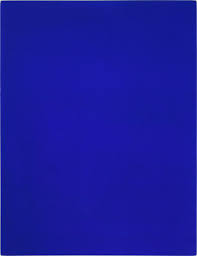
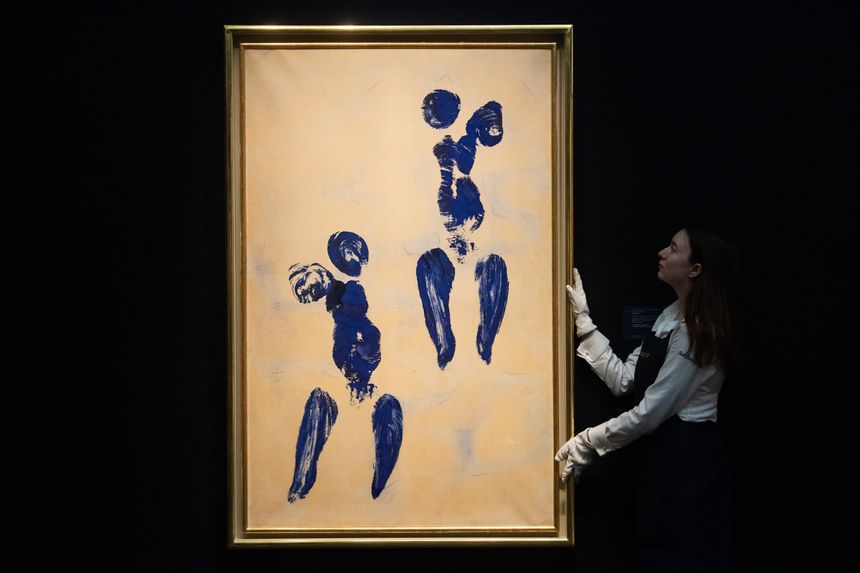
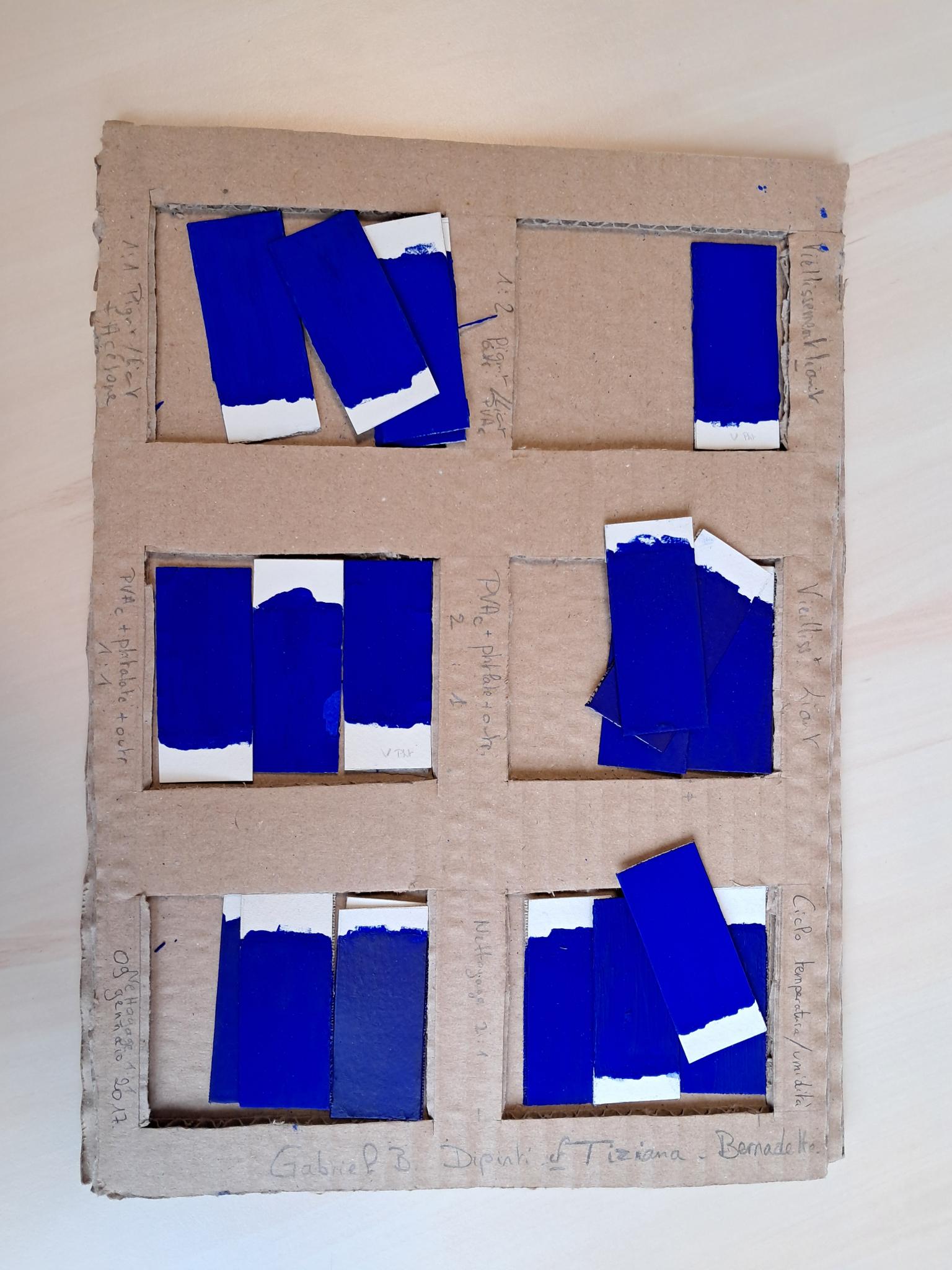
The ultimate goal of our work is to better preserve Klein’s fragile artworks, as he used very little binder with the blue pigment. The paint is therefore very powdery, and our work with CR2PC is to understand how to conserve/restore these works while maintaining the same visual appearance.
C2RPC created characteristic samples of the techniques used by Yves Klein for us to characterize, i.e., to quantify their optical properties. Visually, we notice that some samples are shinier, and our objective is to explain why. We need to link the material parameters to its optical properties to explain the visual differences.
We measure gloss, color, and also bidirectional reflectivity (the amount of light reflected by a material in a given direction).
Our objective is also to develop a non-contact characterization device. Unfortunately, measuring the gloss of a material requires touching it. The measuring device is placed on it, which is not ideal for the conservation of works of art.
We have also made initial contact with the Museum of Modern and Contemporary Art of Saint-Étienne and the Centre Pompidou for future measurements directly on artworks.