
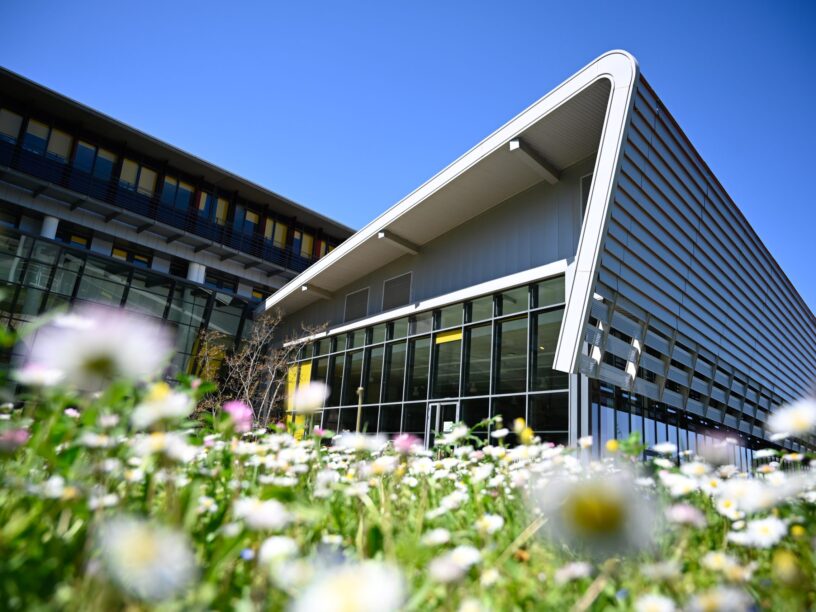
The School is reducing its carbon footprint month by month. It is maintaining this virtuous course to reduce its greenhouse gas emissions by 43% by 2030.
Mines Saint-Étienne, based on the GHG (greenhouse gas) emission reduction targets set by the European Union and implemented at the national level by the Energy and Climate Law, has committed to reducing its harmful emissions by 43% by 2030 (compared to 2019).
This objective appears achievable in light of the indicators recorded between 2022 and 2023:
- The actions implemented as part of the energy sobriety plan have a significant impact on GHG emissions from energy consumption across all Mines Saint-Étienne buildings (gas and electricity), which decreased by 6.6% compared to 2022. This reduction corresponds to 67 tonnes of CO2 equivalent not emitted.
- The mobility plan and teleworking policy have reduced GHG emissions from commuting by 23%, representing 65 tonnes of CO2 equivalent not emitted.
- In contrast, the resumption of activity (and particularly international exchanges) following the Covid-19 pandemic led to an increase in GHG emissions from business travel: +25% (use of service cars, train, and air travel).
Overall emissions from Mines Saint-Étienne activities therefore continue to decline despite some indicators showing a slight increase. This good news is encouraging. It must not overshadow the efforts that still need to be made, particularly regarding travel, in order to respect the virtuous trajectory the school has set for itself.
As a reminder, Mines Saint-Étienne conducts an in-depth carbon footprint assessment every three years based on data from the previous year.
During this three-year period between official assessments, the main emission sources are monitored annually to ensure they remain on track.