Margot Viel
I particularly admire women who fight for their rights.
Margot is a student at Mines Saint-Étienne in partnership with ISTP. She is completing her degree through a work-study programme at Unither Pharmaceuticals, specializing in energy performance.
This 21-year-old student is part of the IMT and Fondation Mines-Télécom Ambassadors programme, which aims to promote scientific career paths to young girls. Through this portrait, we will look back at her journey, which reveals that many obstacles to the feminization of engineering still exist, as well as the means to end them.
What female role models are there for young women in science?
Today, 1 in 3 female students is discouraged from choosing scientific studies. According to L’Etudiant, the two main sources of discouragement are family and teachers. The latter are cited by 60% of female students “as the main actors of deterrence.” The figures are quite alarming, particularly in France, where the number of female graduates in scientific fields is increasingly declining, whereas in Europe, between 2013 and 2020, this proportion increased by 19%.
Lack of encouragement, sexist remarks, and persistent stereotypes—we asked Margot how she overcame these barriers and believed in her abilities. Her answers highlight the importance of one’s social circle and female role models.
“My mother is a physics and chemistry teacher. When I was little, she explained the changes in the state of water to me, which gave me a taste for science very early on. My parents were drawn to science. As a family, we often watched scientific documentaries. They didn’t push me, but they passed on their curiosity and passion.”



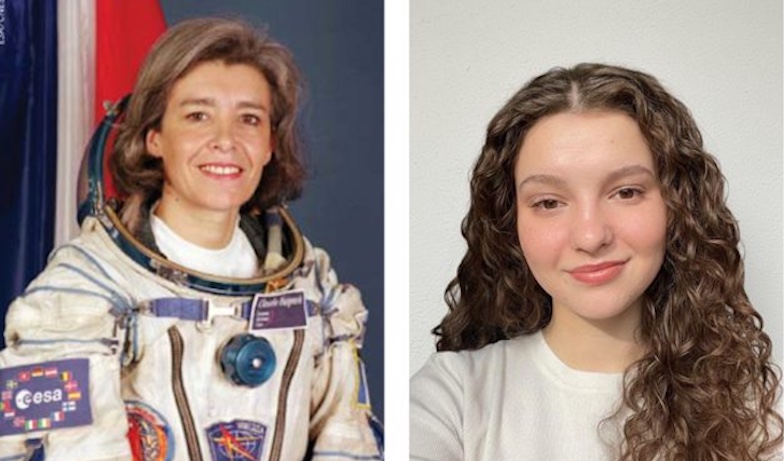
“I am mainly inspired by contemporary scientists, such as female engineers and researchers working in aerospace, energy, or technology. For example, I admire Claudie Haigneré for her exceptional career path between medicine and being an astronaut. But my greatest role models are often people I have encountered in my own journey: passionate teachers who had a strong impact on my interests.”
Margot also cites Malala Yousafzai, the Pakistani women’s rights activist and 2014 Nobel Peace Prize laureate. It is important for our ambassador to point out that beyond engineering, girls’ access to education in general must be defended.
“Despite the risks, Malala shows exceptional determination. I particularly admire women who fight for their rights.”
It should be noted here that French women represent 56.9% of the university population, but only 27.7% of them are in engineering schools.
How can we combat gender discrimination in engineering?
In 2020, the Ministry of Education noted that “girls succeed better at school than boys. They are also more likely to obtain their baccalaureate, with 86% of female students graduating compared to 76% of male students per generation.” Furthermore, “the skills gaps between girls and boys in scientific subjects are small. Self-confidence, social norms, and gender stereotypes, however, are increasingly cited as predominant explanatory factors.” Margot tells us about heavy-handed jokes during her studies and misogynistic remarks that can be discouraging. In 2023, 3 out of 10 female students had to deal with sexist behavior. The simple fact of being a woman can therefore be a barrier to learning.
In the workplace as well, discrimination and the feeling of always having to prove one’s skills and justify one’s point of view exist for work-study students. This is a real obstacle to professionalization and even to the desire to have a scientific career.
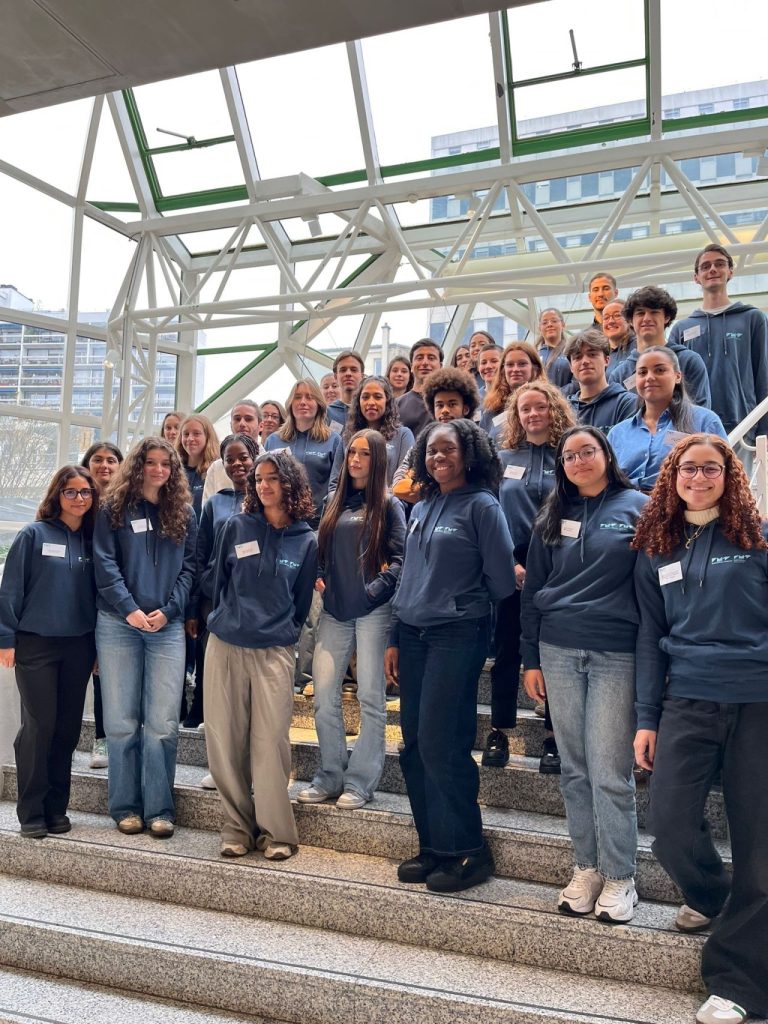
Yet companies are the place where change is possible. The International Labour Organization highlights that better gender parity in companies improves productivity by 5% to 20%. In a previous article, Ana Cameirao, director of the SPIN center at Mines Saint-Etienne, reminded us that diversity is the key to innovation in business. It is also a way to meet the expectations of younger generations who are more sensitive to parity and inclusivity.
“You have to find out as much as possible and, above all, not set barriers for yourself. Girls have the right to be ambitious, and they shouldn’t be afraid of it.”
Towards the feminization of engineering?
In conclusion, despite the slow integration of girls and women into science, concrete actions are possible to feminize engineering. For Margot, it is largely a matter of role models and inspiration:
“I think one of the main levers is to show female role models: seeing female engineers and female students in engineering schools can inspire others and help overcome certain misconceptions.
It is also about breaking gender stereotypes. Girls are no worse at mathematics or biology than boys; it is a question of representation and reclaiming self-confidence.
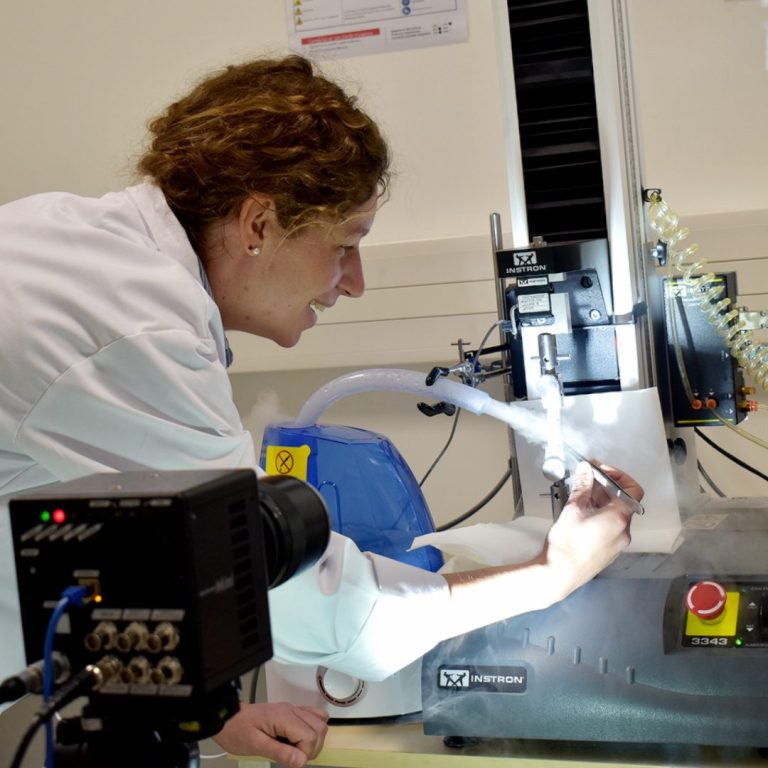
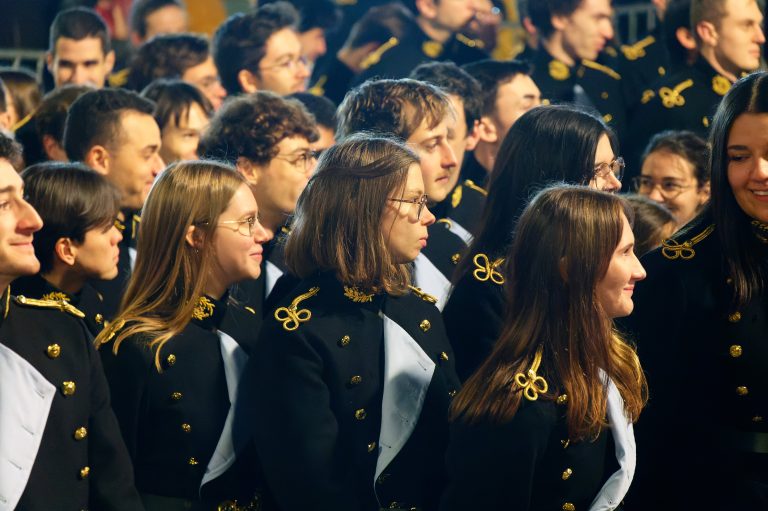
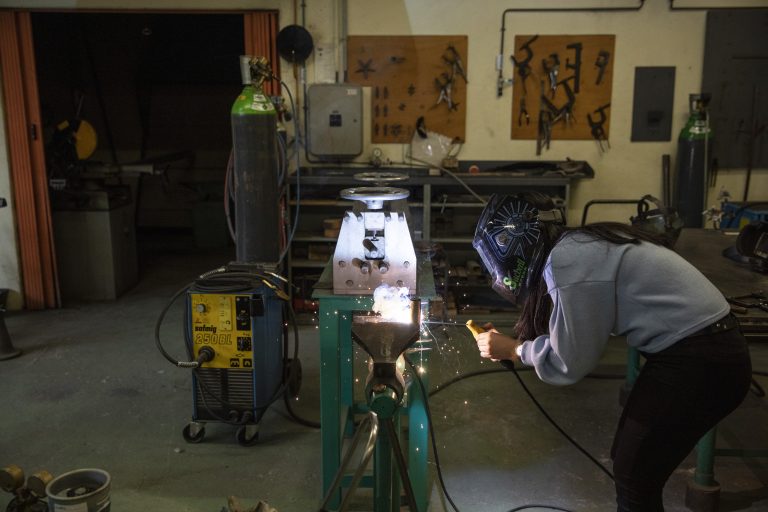
“Girls should also have more confidence in their abilities in maths and science. Many underestimate themselves; their work must be valued from a very young age.”
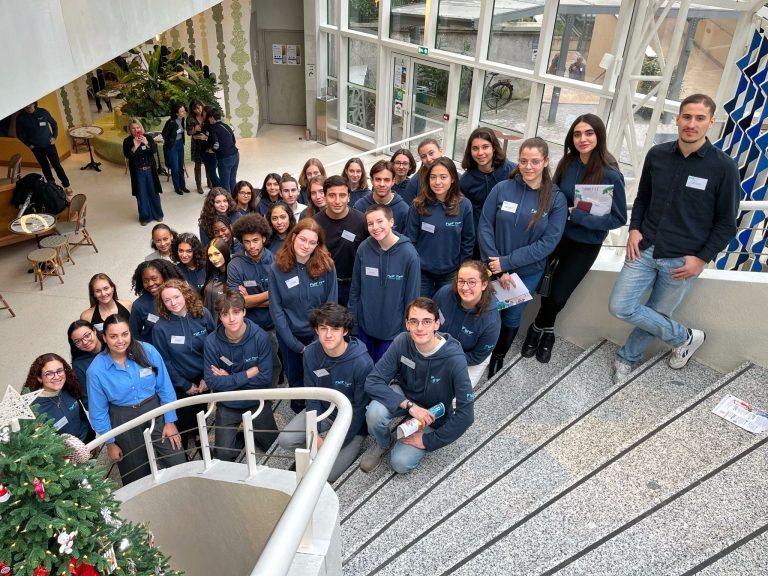
Engineering schools and companies also have a role to play in attracting and encouraging women to pursue scientific careers. At Mines Saint-Etienne, the Ambassadors programme invites students to share their experiences and encourage younger girls to take an interest in science. Margot Viel proves to us that with an encouraging environment and female role models, women can believe in their scientific abilities and find their place in engineering.