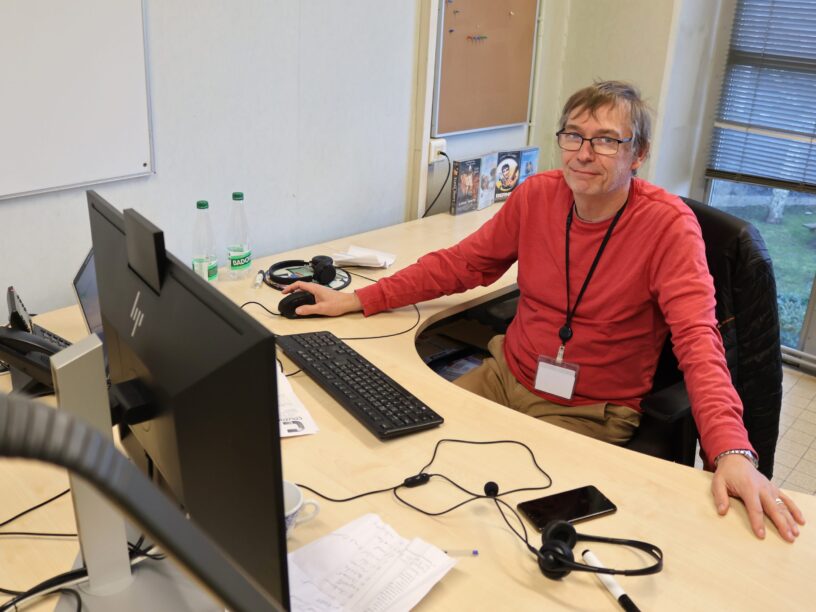
Currently the director of the SMS Centre (Materials Science and Mechanical Engineering), he will lead IMT’s “Responsible Industry of the Future” theme as part of an assignment until 2027.
1. What benefits can be expected from the structuring of IMT (Institut Mines-Télécom) for the deployment of major research and education projects?
The expected benefit is the coordination of all the skills and expertise of IMT’s schools to structure a broad offering for our academic partners, national research organizations, and regional, national, and European public funders. Mines Saint-Étienne is perfectly positioned in scientific fields such as industrial engineering, automated learning, microelectronics, health, processes, and materials.
2. What will be your role in the initiative?
My role will be to foster exchanges between researchers from the schools to facilitate project development, leveraging IMT’s scientific communities and its three other strategic themes. Operationally, this role involves a presence at IMT’s general management as well as within the schools to better integrate each school’s strengths in terms of technological platforms capable of offering solutions for the industry of the future.
My role will be to foster exchanges between researchers from the schools to facilitate project development, leveraging IMT’s scientific communities and its three other strategic themes.
Christophe Desrayaud, director of the SMS Centre
3. Could you provide a concrete example?
The “Reclassif” Project on the industry of the future. It involves the ten IMT schools, including Mines Saint-Étienne, in collaboration with the Centre of Microelectronics in Provence, the Henri Fayol Institute, and the Materials Science and Mechanical Engineering Centre. This project will enhance the technological platforms of IMT member schools to strengthen their joint offering to socio-economic stakeholders.