
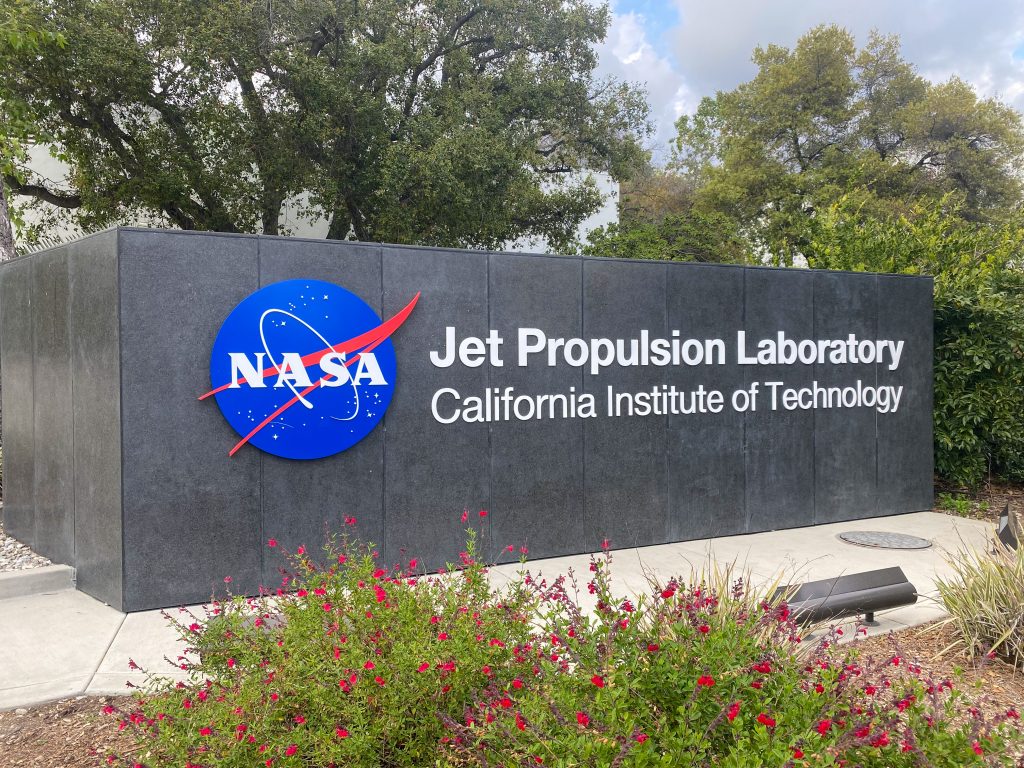
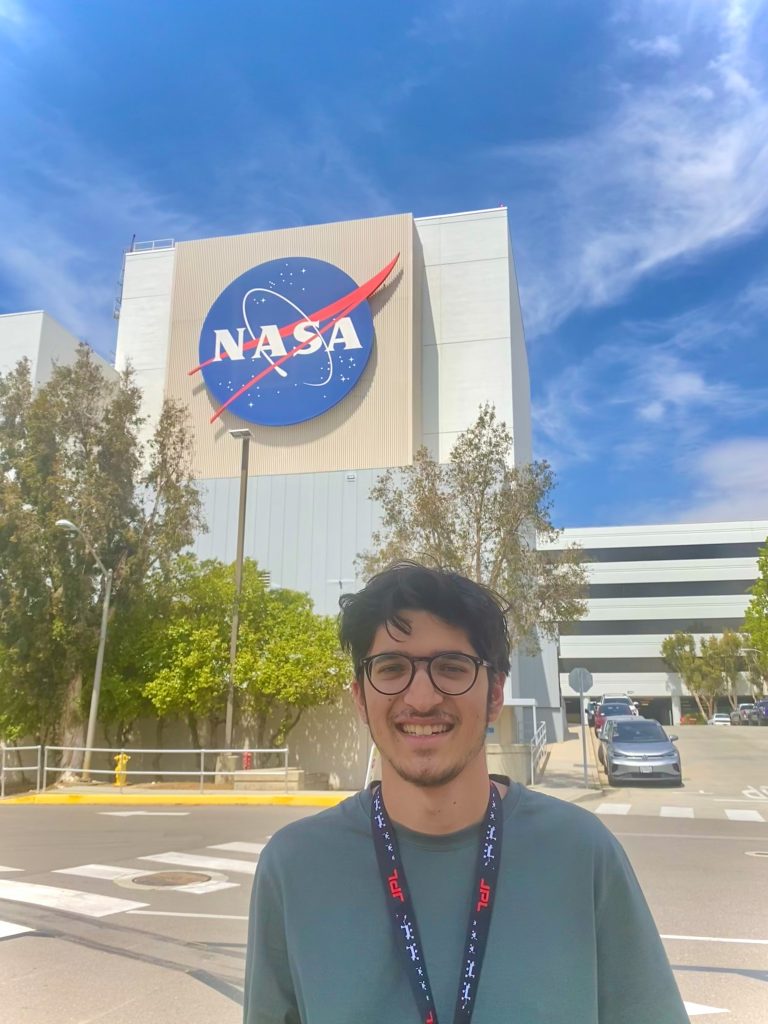
Tristan Lecourtois is a second-year ISMIN student. He is currently interning in the United States at NASA’s Jet Propulsion Laboratory (JPL). He gives us an update.
What are your missions at NASA?
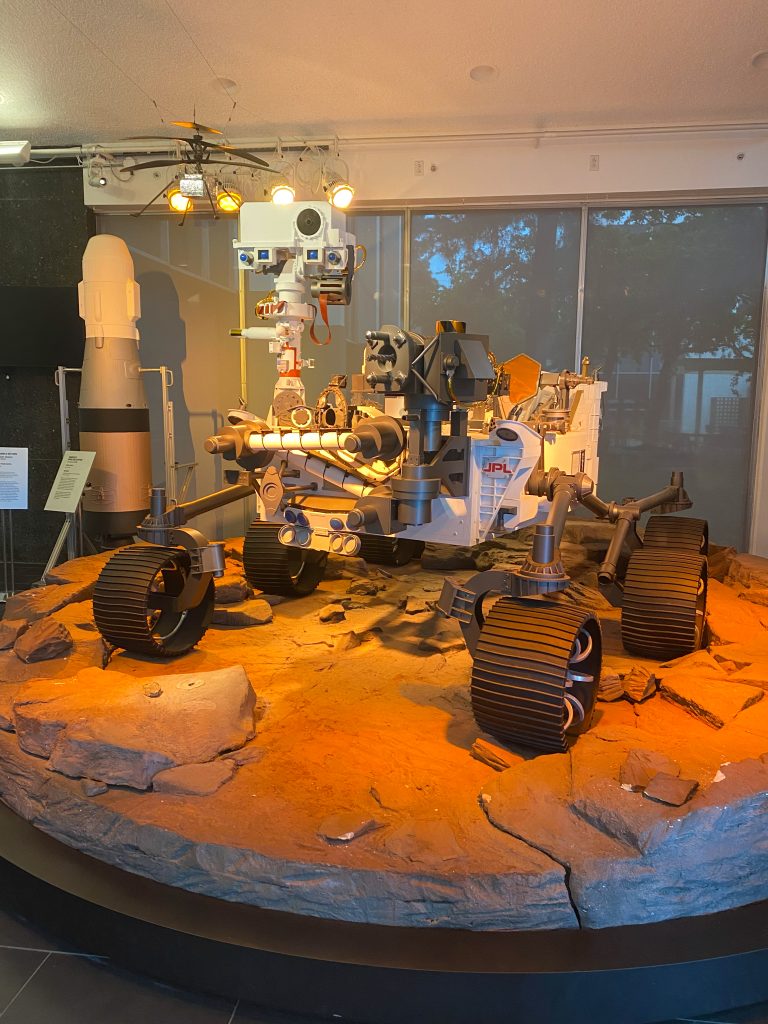
“I am at NASA’s Jet Propulsion Laboratory (JPL) in Pasadena. I work in the AI and Data Analytics team, developing embedded cognitive systems for rovers and robots. My role is to equip these AI agents with a form of memory – both semantic (what they know) and episodic (what they have experienced) – so that they can understand their environment over time, learn from their experiences, and perform intelligent monitoring. This would allow them, for example, to detect an anomaly by comparing a current situation with past experiences. It’s a fascinating subject, at the intersection of artificial intelligence, robotics, and computational neurosciences. “
How is your life in the United States?
“Life in California, and particularly in Pasadena, is both disorienting and stimulating. Every day at JPL is a new source of inspiration. What strikes me most is the human environment: we work alongside globally recognized experts who remain very approachable. Sometimes I have lunch with them and freely discuss their work or ongoing projects.
JPL is halfway between a university campus and a high-tech company: most engineers are also researchers or professors. This atmosphere creates a very stimulating ecosystem, where you feel that everyone has been recruited for a very specific skill.
Outside of work, I’m gradually discovering the region: walks in the nearby mountains, cultural visits, and sometimes a few getaways to Los Angeles. “
What are the major differences compared to France?
“The JPL campus is a real mini-city, with its own police, firefighters, and even its internal bus system – it’s quite different from French labs! Also, everything is bigger here: the infrastructure, the resources deployed, and the omnipresent ‘space mission’ atmosphere. Even the security measures are impressive: access to certain areas is extremely restricted and highly regulated. Everything is amplified compared to France. And this excessiveness is also found in the city itself: Los Angeles is sprawling, distances are enormous, and public transport is often limited – without a car, getting around quickly becomes a daily challenge.”

Which places do you prefer to visit?
“Among the notable places at JPL, I would mention The Garage, an experimental space filled with futuristic prototypes (rovers, autonomous robots, robotic arms…) where science fiction-worthy ideas are tested. I was also impressed by the gigantic clean rooms, where rovers are assembled under extreme cleanliness conditions, and by the Mars Yard, a full-scale Martian simulation terrain.”
Any anecdote to share?
“In a JPL corridor, I saw a pastel ‘painting’ of the Martian surface, hand-drawn from the first raw data sent by a probe. Engineers, unable to receive digital images at the time, assigned a pastel color to each brightness value. This is how they obtained the first ‘photo’ of Mars… by hand! Ingenious!
Moreover, in the robotic mission control room, which manages the spacecraft sent into space by humanity, a stele is engraved with the inscription “Center of the Universe.” A way to remind us, with a touch of pride, that this center embodies the heart of global space exploration.”
What have you learned from your internship so far?
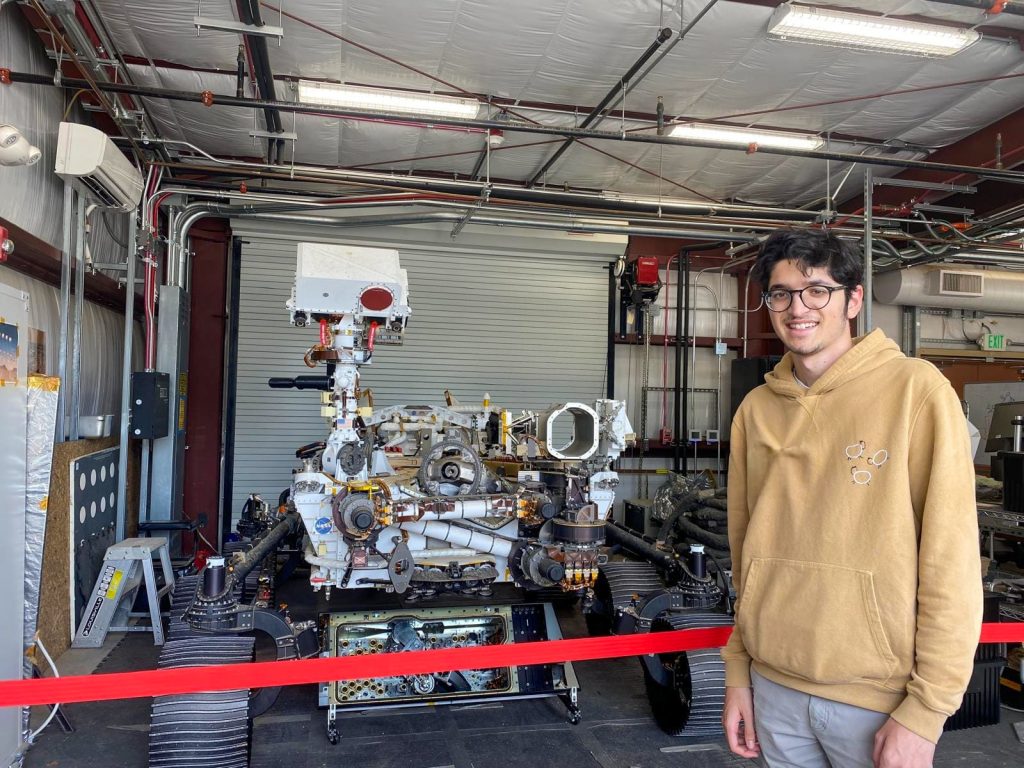
“Being immersed at JPL, surrounded by passionate individuals who shape space exploration, gives a real sense of awe: you feel tiny in the face of the scale of the projects and the history being written around us. It’s even more motivating when working on AI topics, with access to cutting-edge resources and technologies – you truly feel like you’re at the heart of global innovation. Working at the JPL laboratory means evolving in an emblematic place of space exploration, the origin of legendary missions like Voyager, Curiosity, or Perseverance. I am contributing, on my own scale, to projects that push the boundaries of humanity – and that’s absolutely incredible. “