Certified ‘responsible digital level 1’, Mines Saint-Etienne remains true to its ambition to be a school of responsible engineers, a driver of innovations with societal impact. This event was an opportunity to examine the impact of digital technology on human daily life and on the environment.
5 conferences punctuated the festival
This second edition of the Festival was marked by the diversity of its speakers and the themes addressed, offering cross-perspectives on digital technology. Five conferences open to all were held consecutively:
- The presentation of the Loire Collecte project: a circular digital economy initiative in the Loire department, offering the reconditioning and distribution of IT equipment.
- A discussion on ‘free’ computing and ‘responsible’ digital technology brought together digital and higher education experts. Grégory Bourbon (Digital Director of Jean Monnet University), Jacques Fayolle (Director of Mines Saint-Étienne), Thierry Garaix (Lecturer-Researcher at Mines Saint-Étienne), and Dominique Berthet (Director of Information Systems at Mines Saint-Étienne) debated key topics such as mutualization, cooperation, sovereignty, and digital sobriety.
- A conference titled “Fais pas genre” (Don’t Be Like That) on sexism in digital technology.
- A conference on Artificial Intelligence led by Yann Gavet, Lecturer-Researcher at the SPIN center: “AI explained to my children.”
A Ricochet podcast recorded at La Rotonde: GaIA – AI and Natural Resources: Challenges and Issues. This episode is part of the GigoWatt exhibition, featuring 4 staff members from Mines Saint-Étienne: Lina Nachabe (Engineer), Olivier Boissier (Director of the Henri Fayol Institute), Antoine Zimmermann (researcher at the Henri Fayol Institute), and Mansour Mayaki (postdoctoral researcher).
3 workshops were offered by staff and students
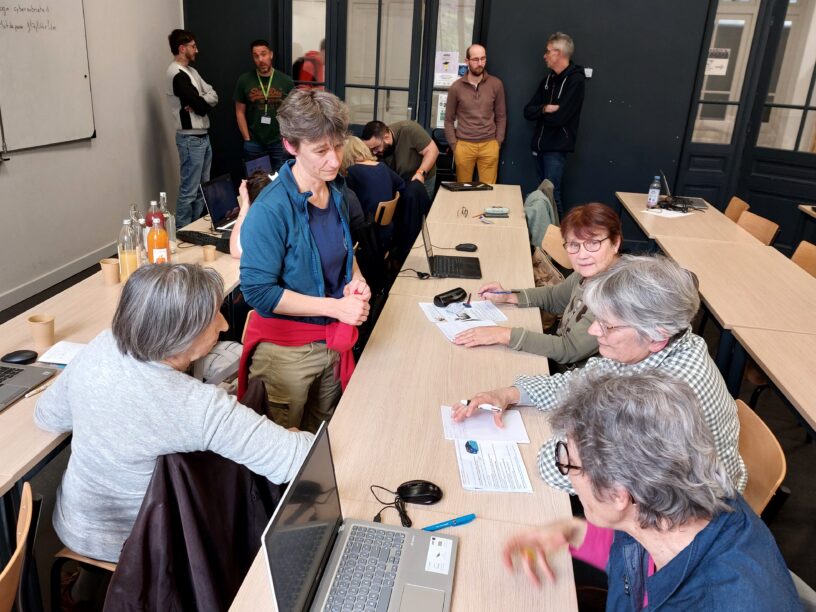
Workshops for support and familiarization with digital tools took place throughout the Festival:
- A digital fresco at the CIS: to playfully understand the environmental challenges of digital technology.
- Two PhonEthic workshops to raise awareness of the complexity of smartphone manufacturing: from raw material extraction, through manufacturing, to final recycling, integrating technological, environmental, economic, social, legal, and even geopolitical dimensions.
The Responsible Digital Festival raised awareness among nearly 150 people about the challenges of responsible, or at least acceptable, digital technology. This event was also an opportunity to mobilize all school staff for the Digital Cleanup Days (global awareness days for the environmental footprint of digital technology through action), where 2.5 Terabytes of data were deleted from various servers.