Objectives
An interdisciplinary exploration of digital health designed to equip students with practical skills in healthcare data analytics, cybersecurity, interoperability, digital, AI and health literacy, ethics, governance, and project management. Emphasizing hands-on learning and international collaboration, this program immerses students in real-world healthcare challenges through lectures, team-based activities, and hackathon exercises. The SHIFT Program will prepare students to navigate evolving digital health environments with a focus on teamwork, global health perspectives, and industry-aligned project management practices.
SHIFT Program Schedule
Week 1
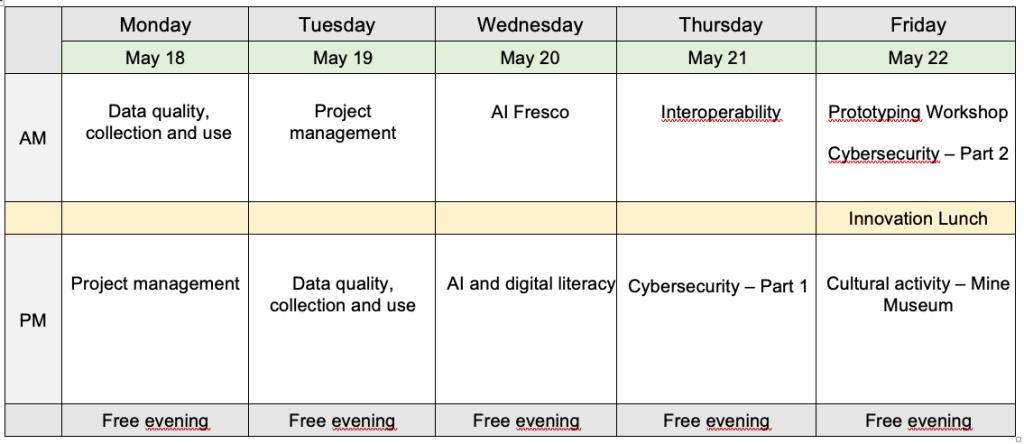
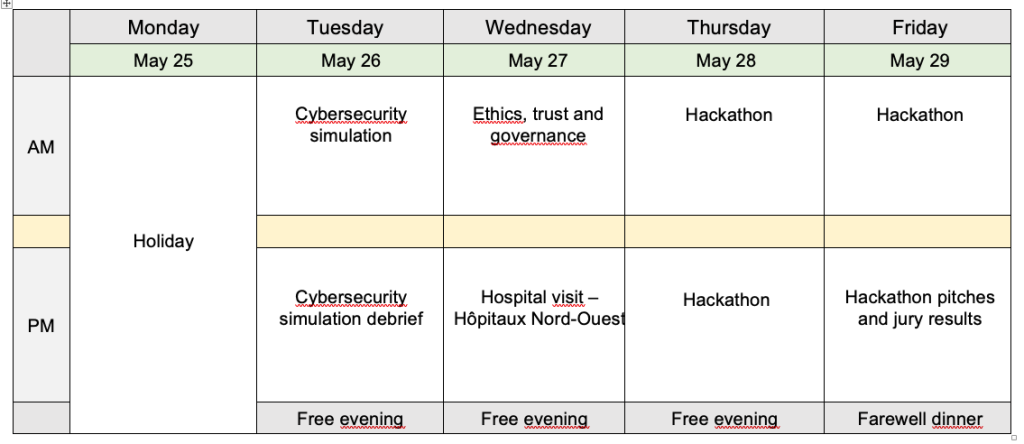
Week 2
Learning Outcomes
- Core Topic: Data Quality, Collection & Use
- Define core principles of data quality in digital health systemsRecognize the main steps of a data-driven AI development pipelineExplain how poor data quality affects clinical care, equity, and innovation outcomes
- Understand the implementation of an AI pipeline using healthcare datasets
- Core Topic: Cybersecurity
- Describe basic cybersecurity principles and types of threats in healthcare systems
- Illustrate how breaches in cybersecurity affect patient trust, safety and outcomes
- Core Topic: Equity & Social Responsibility
- Identify key terms and concepts in health equity, bias, and social determinants of health in a digital context
- Explain how digital health tools can either reduce or exacerbate inequities
- Core Topic: Interoperability
- Define interoperability and list the key standardsIllustrate challenges and benefits of interoperability in multi-provider or cross-platform settingsMap a patient journey and identify interoperability challenges between systems and roles
- Propose a strategy to improve interoperability in a collaborative health tech project, with stakeholder input
- Core Topic: Health, Digital & AI Literacy
- Recognize key concepts in digital literacy, health literacy, and AI literacyCompare different populations’ capacities to engage with digital and AI-based health toolsConduct a usability or literacy evaluation on a health app or tool from the perspective of multiple user groups
- Design an inclusive communication or training plan to increase digital/AI health literacy in a target population
- Core Topic: Ethics, Trust & Governance
- Identify core ethical principles and key concepts in data governance and digital trustExplain how ethical considerations influence trust in digital health technologies across diverse populations and stakeholders
- Analyze a digital health case (e.g., algorithmic bias, AI decision-making) through an ethical and governance lens
- Core Topic: Project Management
- Describe the principles of change management in healthcare projectsInterpret the emotional and organizational aspects of change from various stakeholder perspectivesCreate a stakeholder engagement map and risk analysis for a digital health implementation project
- Lead a simulated change management strategy session with a multi-disciplinary team, reflecting human-centered values
Evaluations
• Class Activities: students will engage in a variety of learning experiences including case studies, hands-on workshops, industry site visits, and cultural activities. Some activities will require formal assignment submissions, while others will be assessed through active participation and engagement.
• Cybersecurity Activity: this immersive activity centers on a cybersecurity incident. Students will gain insight into the interdisciplinary collaboration required to respond to a cyberattack, exploring roles in operations, risk management, health informatics, data science, and administration.
• Hackathon: this team-based project involves working with subject matter experts (SMEs) who will present current or anticipated challenges in their domains. Teams will then develop a strategic solution or concept in response. During the two-day event, student teams will receive mentorship from coaches and ultimately pitch their ideas to a panel of judges. A winning team will be selected.
Note: This is not a technical hackathon—the emphasis is on innovation, strategy, and interdisciplinary collaboration.